In Dungeonbound you never swing a sword. You pack a bag, and the bag does the fighting. Every item on the grid runs on its own timer: a plain shield adds a point of block every six seconds, an earring poisons the enemy without you touching anything, and the fight just plays out. I put about five hours into the free demo before the full release on November 15, and my answer is yes, play it, especially if rearranging an inventory is the part of other games you secretly enjoy most. Just know that the game hides some of its best numbers from you.
Your build is your inventory
A run starts with 200 gold. You buy a starter kit, drop it onto the grid and press Start Battle. After that it is hands off. In theory you could go make a coffee while it plays (in practice you can’t, because that button is waiting before every single encounter).
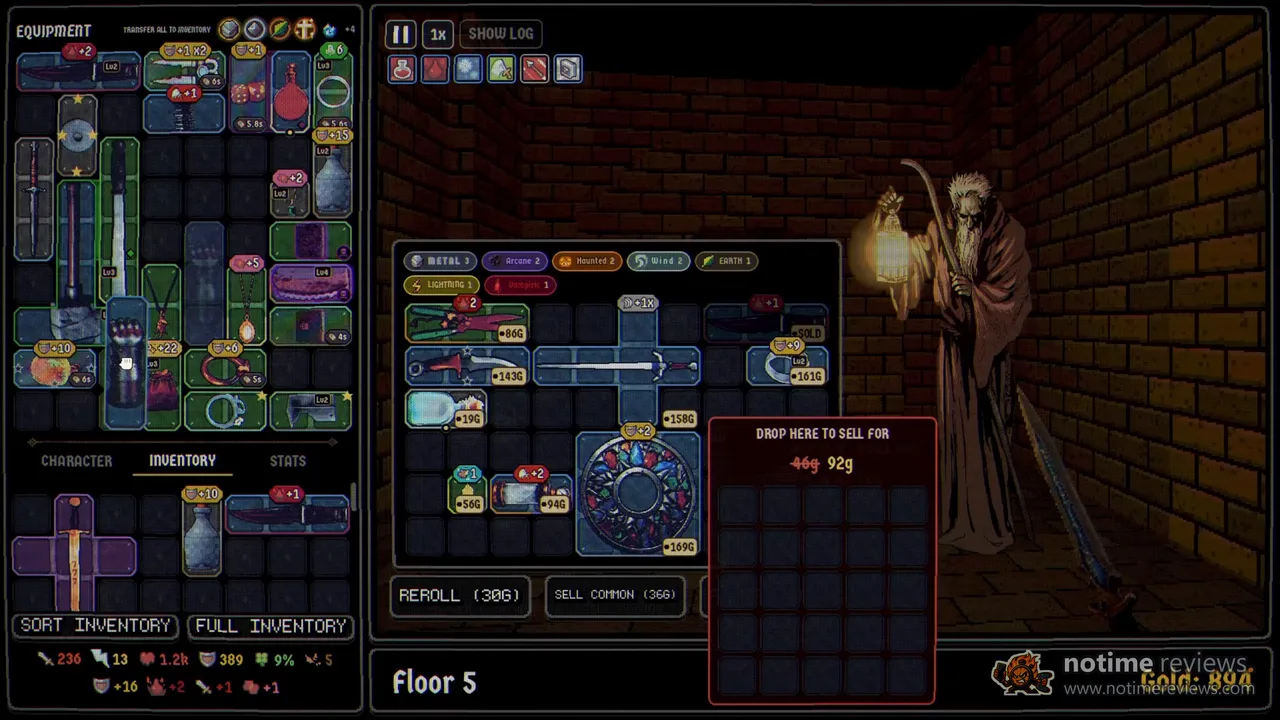
So where is the strategy? In the packing. Some cells on the grid are runes, and whichever item covers the most of a rune takes its power. Park something on the poison rune and it adds a poison stack every time it triggers. Lots of items also want a specific spot: a corner, the middle, right next to your weapon. Moving one dagger two cells can change a fight.
If you are the kind of player who spends ten minutes tidying an inventory just because it feels good, this game was made with you in mind.
The bonus the game won’t show you
Then there is affinity. My paladin was tuned to Holy and Metal, and a relic I picked made frost items count as my hero’s type too, so anything with those tags got extra stats. Nice. The problem is that Dungeonbound never shows that bonus on the item. The tooltip lists base stats only.
I had to pull a frost item out of my inventory and drop it back in just to see what it was worth: 39 damage without the bonus, 47 with it. That is a real difference, and I would like to see it on the item itself instead of doing experiments in my bag.
Sets have the same problem, only worse. I expected them to work like Diablo, where a handful of specific items belong together. Here a set is just every item that carries the same tag, so all your metal gear counts as one set. Nothing in the game explains this. I figured it out in my fifth hour.
Too many items, too little grid
The grid is small and the game keeps handing you more than fits. Every floor turns into a space problem. Skipping a floor grows the inventory a little, but between fights the shop keeps piling on more stuff you want.
Fusion is the real way out. You merge two items into one and it keeps the bonuses of both, a bit weaker on one side and a bit stronger on the other, but both are still there. I fused a shield that ate seven or eight cells into an item that takes two, it still gave me block every six seconds, and suddenly there was room for more gear.
On top of that, each floor lets you pick a relic that stays with you for the whole climb, and a blacksmith upgrades your equipment. There is also gambling, which can upgrade an item, curse it, or break it outright. My first gamble cursed the item. Later in the same run I hit the jackpot: three levels at once.
All of this makes runs long. There is a 2x speed button, but I played at normal speed because I still did not understand everything happening on screen.
Dungeonbound screenshots
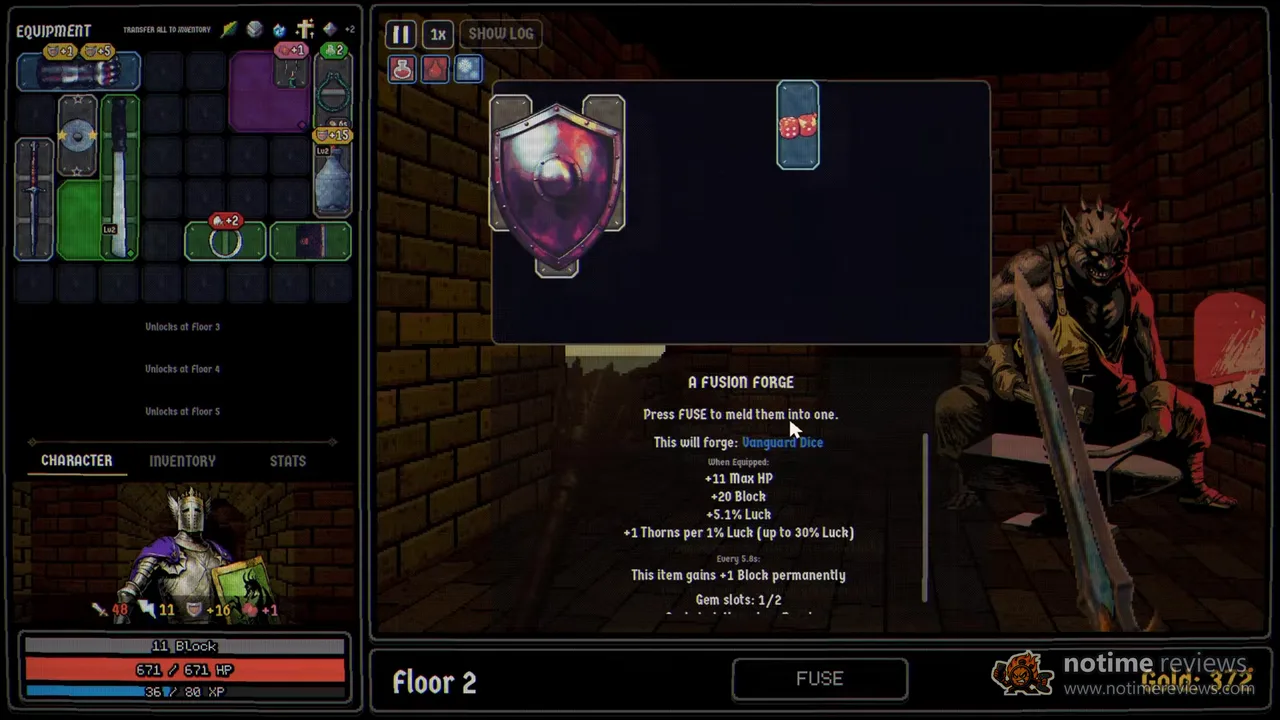
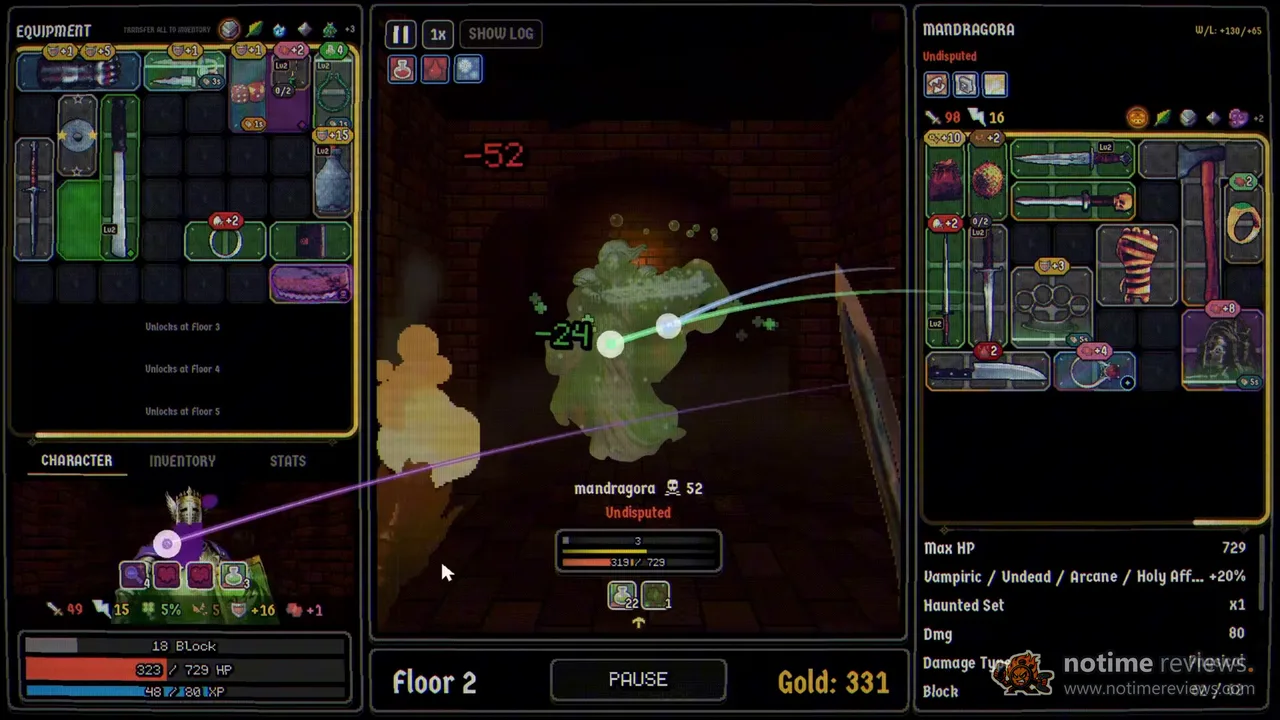
Potions with an expiry date
Not everything you buy is really yours. Most consumables come with only a few charges, and they can break after any battle. The holy water I bought had a 20% chance to vanish after each fight. It clears a debuff, which sounds great until you meet an enemy that stacks that debuff every turn. Then the water covers you for two cycles, runs dry, and might break on the way out anyway.
Some jewelry lowers the break chance, which helps. Part of this is personal: I have never liked durability in games. But with so few charges and a real chance of losing the item, consumables are just not worth the gold here.
Two games in one
Besides the roguelite climb there is an incremental mode. It still has random events and random enemies, but your progress carries over, so even a losing run gives you something. Gold and experience from every run go into an upgrade tree for damage, stats and unlocking new heroes. The Steam page lists seven heroes for this mode, and each one keeps their own gold, so you can’t farm a million on your main and then roll through the game with a fresh character.
The rules change too. You get one life per run and one weapon. Your health does not reset between fights, so every hit you take comes with you into the next one. The bag grows when you pay for it, and my next row was going to cost 800 gold.
My one complaint here: for an incremental game, it does not play itself. That Start Battle button before every fight feels strange in this genre. It is something for the developer to look at later, not a reason to skip the mode.
The hardest enemy was another player
The incremental mode only puts regular monsters in front of you. The roguelite climb is where other players live, and that is where the hardest fights happen. Often the enemy standing in your way is another player’s build, saved when they cleared the floor, with their full inventory and everything on it. These are usually much tougher than normal enemies.
One of them, mandragora, had killed 52 players before reaching me. It was close, but I won. In long, even fights like that, fatigue kicks in: after a while the side that heals better takes it, instead of the fight dragging on for ten minutes.
The dungeon keeps getting meaner. One enemy carried a legendary hammer that hit for 320 damage every 10 seconds, so I had to take it down fast. I did. Not every fight went that way, though. Losing a battle costs one of your five hearts and sends you back to the start of the floor. Floor five took my last heart, and I finished the day at 142nd on the leaderboard.
Who should play Dungeonbound
The variety of builds is the best thing about it. You can go frost and freeze items in the enemy’s bag, stack bleed or poison, or ignore all of that and simply outdamage them. It looks great as well: the enemy models are detailed and well drawn, so everything you fight is a pleasure to look at.
The two problems are real. The game does not tell you enough, and consumables are a waste of gold. Neither one stopped me from wanting another run. If you like autobattlers and building a character through a backpack sounds like your favorite kind of puzzle, Dungeonbound is worth your time. The demo is free on Steam right now. Expect to spend more time packing your bag than fighting.