
Deified is a turn based tactical roguelite built around one unusual idea: there is no mana, no action points and no cooldowns. What limits you are the slots your relics sit in, and every one of those slots gives you something and takes something away. It is a clever system and a hard one to master. It took me 18 runs and more than 10 hours to win once, and I still recommend it, just not to anyone who hates losing.
The setup, in the developers’ words: the Lords corrupted the Gold of the Rhine to craft relics of great power and eternal curses, and you play Sator, a prisoner in their citadel who has to beat all 7 bosses and bring the gold back to his people. I did not follow the story much through its cinematics (this is a roguelite you replay, not a story RPG), but the mood lands. Everything is brown sand and ruin, the second act has a bit of Diablo 2 in it, and the flat, hand-drawn art looks like nothing else I have played.
Slots instead of mana
A relic in Deified is an ability. You place relics into slots and use them on your turn, and each slot carries its own bonus and drawback. Every level-up offers a choice of two new slots, so you are always trading. Some drawbacks are mild, like locked slots you cannot rearrange once placed. Others cost me whole fights: slots that end your turn the moment you use them, and one that only works on odd turns, which does nothing for you on the even turn when you are getting wrecked. Because you pick every trade yourself, the same relics can turn into a completely different build from one run to the next.
On top of that sit synergies. Relics share class types (archer, healer, assassin and more) and also belong to a set tied to one of the Lords, and collecting several of the same type switches on bonuses. Aslan relics get stronger each time they are used, Lazaros is built around poison, and Tenet abilities can repeat by going back in time. This is the deepest part of the game and the part I put the least effort into. Deified expects you to pay attention to what each combination does, and I mostly did not, which goes a long way toward explaining those 18 runs.
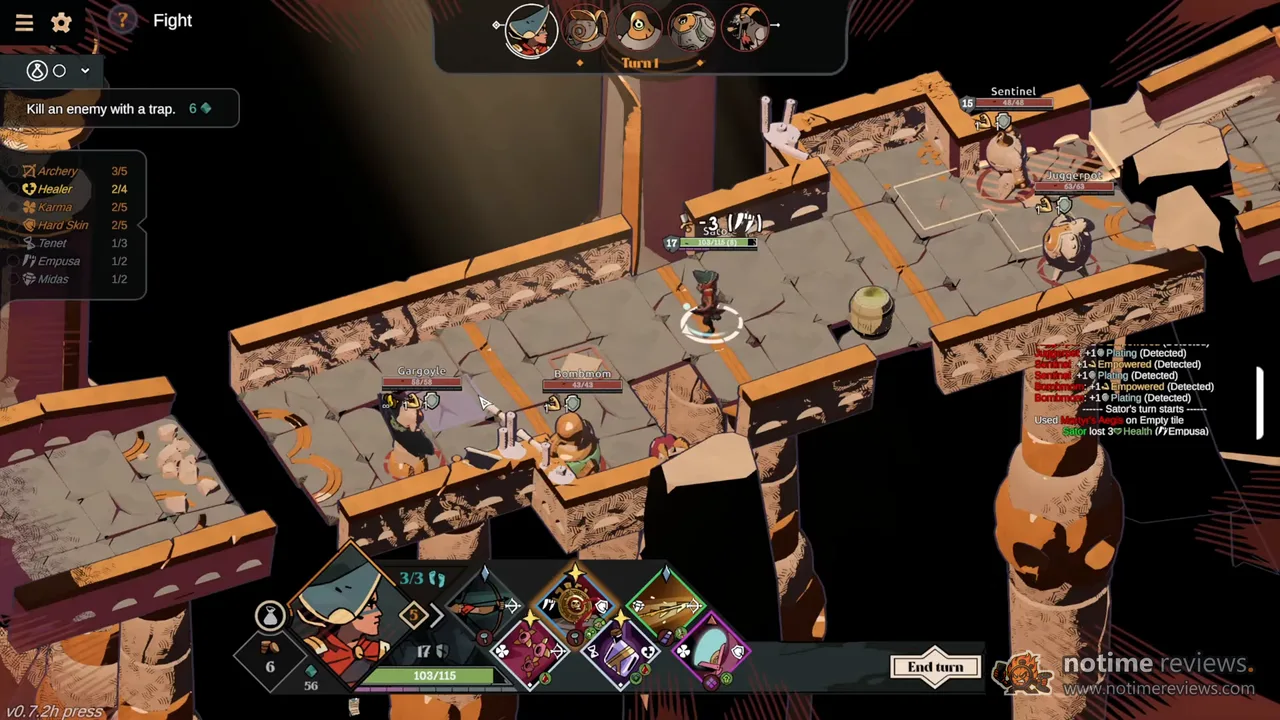
The one relic I did learn properly was Martyr’s Aegis. It costs a little of your own health, pulls every enemy in a circle toward its center, damages them and turns the blood on the floor into armor. Use it next to a ledge and two or three enemies go over the edge for massive damage. In an area damage build it felt a bit overpowered, and it became my favorite relic in the game.
A shop that can start the fight
Runs follow a branching map. Reliquaries pay out experience, gold or Obols, the currency you spend between runs. The library sells passives such as extra shield or better odds at a certain relic type, fountains heal, friendly encounters offer gold, a relic or experience, and merchants carry epic and legendary relics. The forge, which upgrades a relic or removes its negative effect, was the room I visited most.
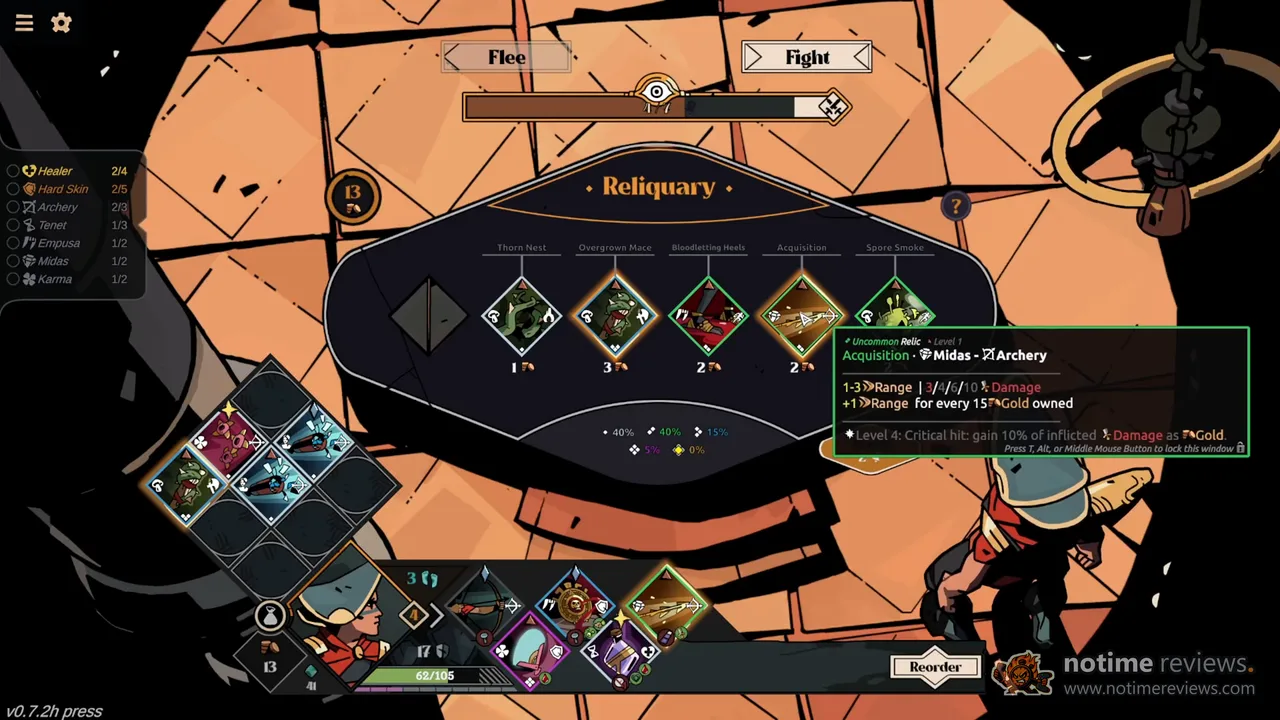
Rooms with a fight give you a choice first: buy relics, reroll them, flee, or fight. Each purchase raises a noise meter, and when it hits 10 the fight starts right away with the enemies holding the advantage. It turns shopping into a gamble, and I lost that gamble often, because I nearly always bought one relic too many. Fleeing is allowed as well. I used it mostly to reach the boss room sooner when I was tired of routine fights.
After two floors, the third makes you choose between two extra difficulty types, such as poison enemies that rise again as zombies or ones that build rage every turn. My only win came through the rage floor.
Deified screenshots
18 runs to win once
Every melee build I tried failed. Around nine hours in, a health drain weapon got me killed in the second room of floor 1, and that was the end of close combat for me. The build I enjoyed most, crowd control with area damage, made it to the last room before the final boss and then died to poison ticking for 160 a turn. Forty minutes of progress, gone in two turns.
What finally won was a ranged build stacked with armor and healing. That run took close to an hour and ended against Lord Empusa, who was under control until the second half of the fight, when he started tearing through my shield. I finished with about 20 health left.
Boss matchups matter a lot. One boss takes no direct damage at all and only loses health when it heals its minions, which is easy with area damage and miserable with a single target melee build. I would not call that unfair; sometimes the draw goes your way and sometimes it does not.
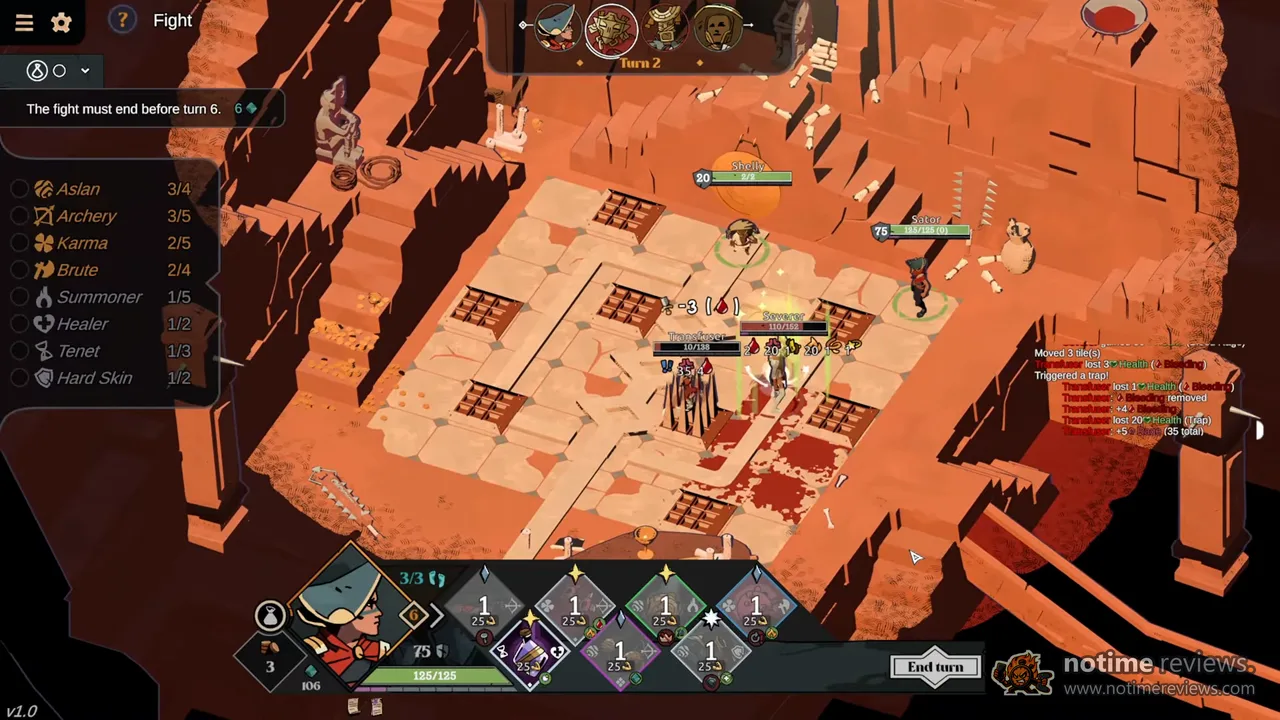
The real problem is that a death is final. As far as I found, there is no way to swap relics and retry a fight (unless it hides behind an upgrade I never bought), so losing a run means around 40 minutes to get back to the same point. I like that the game refuses to go easy on you, and I also would have paid a lot of gold for one second chance. Enemy types repeat from run to run, too, and they walk into traps they could easily avoid. I did not run into any bugs.
Was it me or the patch?
Between runs, Obols go into the Temple skill tree, which also unlocks new rooms. For 10 hours I spent mine on health and shield, then damage, and kept losing. Patch notes I read afterwards say Obols can also be spent during a run to reroll rooms or bosses, and that the developers greatly increased the Obols earned per floor and made fountains and merchants cheaper. Whether my win came from the upgrades finally adding up or from the patch, I cannot tell. Winning unlocks the Well, which adds curses to future runs for more difficulty and more rewards, and that is where the long-term replayability sits.
Who should play Deified
At $14.99, with 10% off until October 5, Deified is worth it for anyone who enjoys a demanding tactics game and does not mind losing. Skip it if you want a story, short runs or a game that forgives mistakes. It deserves more attention than it is getting, the small French studio behind it is still adjusting it after Early Access, and the soundtrack fits both the atmosphere and the combat so well that it kept pulling me back for another run.