Deck Beasts promises that you build a deck and then shape it into a team. In the free demo, you don’t really build anything. You react to whatever the shop deals you. It’s a good auto-battler wearing a deckbuilder’s name, and I still had fun with it, which is why my verdict is a hard maybe rather than a skip.
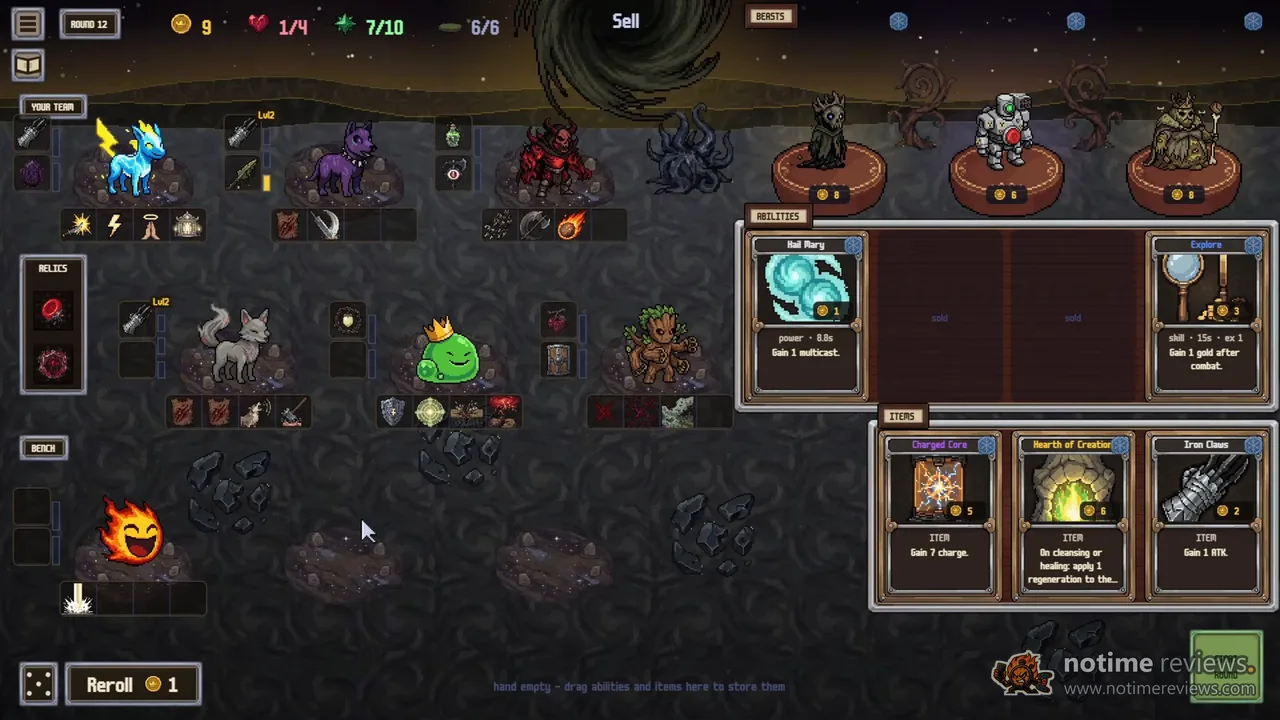
The setup is simple. Constellation Studios gives you a starter deck, some gold and up to six combat slots (plus three on the bench). Each round the shop rolls monsters, abilities and items from your deck, you buy what you can, and then your team fights a saved snapshot of another player’s team on its own. Win and you earn medals. Lose and you lose health. Lose four times and the run is over.
And the sprites. They sold me before anything else did - every beast looks like nobody else drew it, and I love them.
Same wolf, different job
The best idea in Deck Beasts is that nothing is locked to a monster. Any beast can carry any item, and you buy skills for them during the run. Across my runs the wolf ended up as a pure attack damage monster once and a bleed stacker another time. Nothing stops you from going further, either: a griffin throwing fireballs and blizzards is a perfectly legal build.
So no two runs have to look alike. That part of the pitch holds.
It holds right up until the shop starts rolling, because a skill only shapes a monster if the shop offers it and you can afford it.
The shop plays the run for you
Money is tight. You get about 8-10 gold a round, a reroll costs 1 and monsters cost 2 to 6 depending on rarity. Whatever you don’t spend before the fight is gone. You can’t lock the shop or hold an item for later either, so if something great shows up that you can’t afford yet, you will only see it again if you get lucky.
That leaves three ways to play, and none of them is a plan. Skip buying slots and monsters while you wait for the pieces you want, and you fall behind: the fights get harder and you don’t get stronger. Chase level ups instead, and you run into the math - a level 3 monster needs six copies, which takes extreme luck. Or take whatever the shop hands you, in which case your build plan no longer matters.
My best run was that third option. Avatar of Wrath showed up, I stacked four massive AOE skills on it, and it cleared the board. I didn’t plan any of that. I just happened to be there when it rolled. When I reviewed Batomon Showdown, I always knew which direction I was pushing a run. In Deck Beasts I never did. The build I end up with is whatever the shop allows me to have.
60 monsters and one poison plan
The obvious answer is the deck itself. If the shop only rolls from your cards, building a tight deck should give you control back. That’s where mine fell apart.
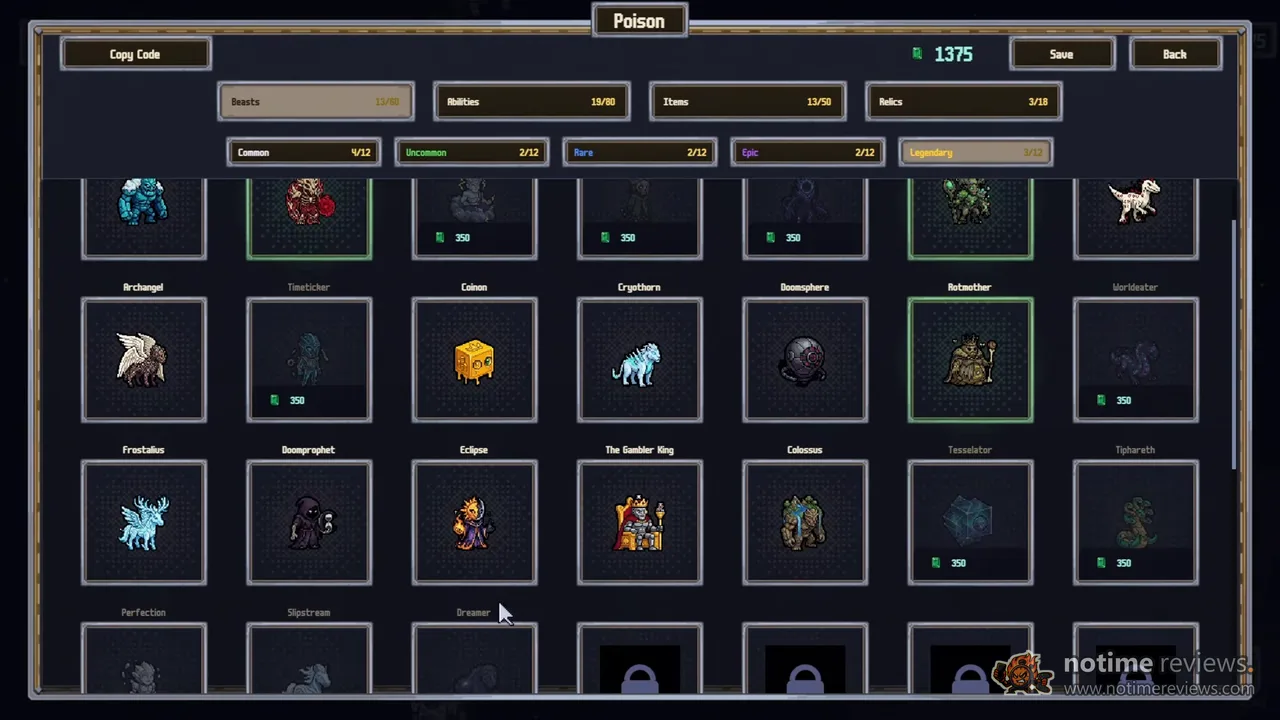
I wanted a poison build, so I tried to make a deck for it. The game makes you fill 60 monster slots, in five rarity tiers of 12, plus 50 items and 18 relics. The demo has around 10 monsters with a poison passive and even fewer poison items. Most of that deck can’t poison anything.
The common tier shows the problem best. The demo offers 20 common monsters, I have to pick 12, and only 4 of them relate to poison. That’s eight monsters I never wanted, thrown at me every roll.
Then there’s the dream card: Rotmother, a legendary that adds poison stacks to the enemy every three seconds. She’s one of 12 legendaries in the deck, and the shop can roll duplicates. Sure, every monster can carry any item, so anyone can deliver poison in theory. But at what point does the deckbuilding kick in? In this demo, tailoring a deck nudges the odds a little. It doesn’t build a run. It’s about as useful as a menu in a restaurant that serves whatever happens to be in the kitchen.
Deck Beasts screenshots
Fights I couldn’t read
If I can’t control the build, I should at least be able to learn from the fights. I couldn’t.
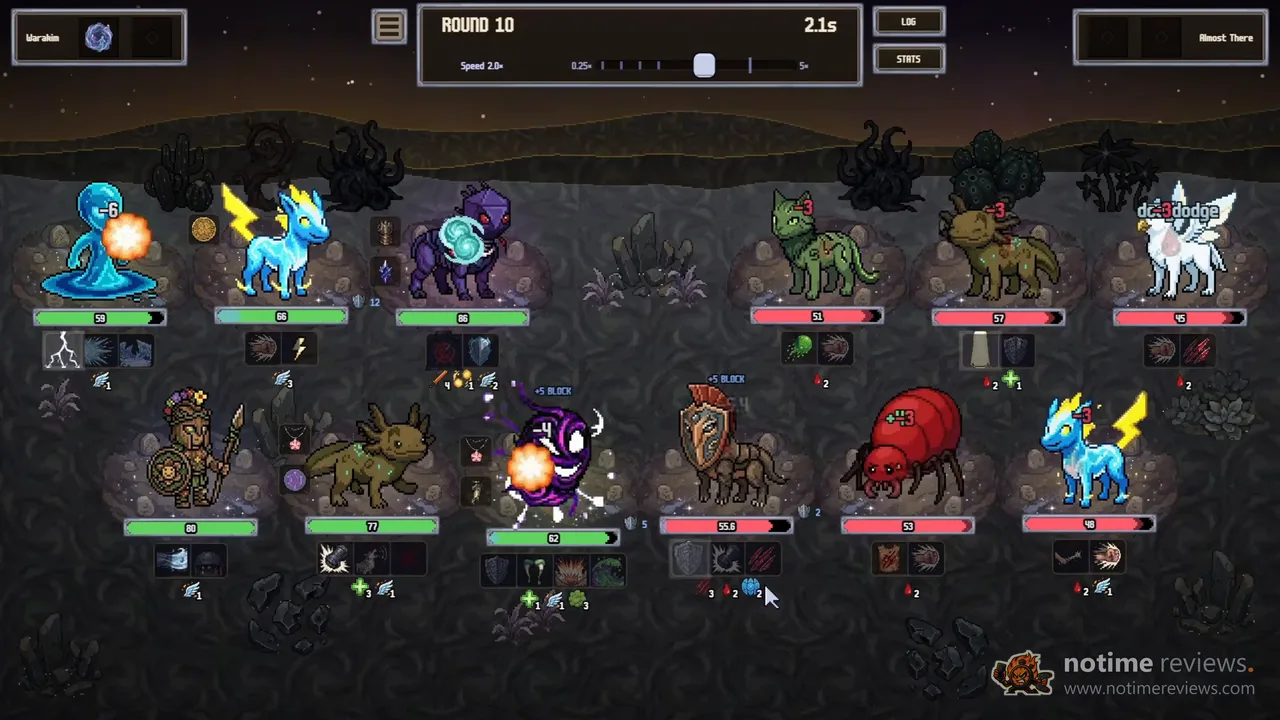
There are so many status effects that I lost track of who was applying what to whom. The data is all there, and there’s even a combat log. I opened it a few times, but most of the time I forgot it existed - and where is the fun in reading a log in an auto-battler anyway?
Early fights crawl. Monsters have 50-60 HP and deal up to 5 damage, plus whatever their status effects add, so it takes about 10 rounds to bring the other side down. Longer if someone is healing. It’s hard to finish the job before Astral Decay kicks in and both teams start taking damage over time.
Then something tips. More times than I can count, my team went from full health to zero in about a second, and I have no idea how or why. So the fights are either too slow to be tense or too fast to read. I never felt countered by a smart build, and with this much noise on screen I couldn’t tell you whether I was. A wipe I can’t explain is a wipe I can’t learn from.
The grind, and the free-to-play question
What’s left is the grind between runs. Every run pays out currency, and you spend it unlocking new cards for the deck that decides what the shop can roll.
The full game is going to be free-to-play. In the demo I saw no store and nothing that looks pay-to-win. What I can’t tell yet is whether that currency does anything beyond unlocking cards, or whether you’ll be able to buy it. That’s not a flaw yet, just the question the demo doesn’t answer, and it’s the first thing I’ll check when the full game lands later this year.
On the technical side there’s nothing to complain about: in a couple of hours I hit no bugs and no performance issues.
Who should try Deck Beasts now
There’s a good game in here. The any-monster-any-skill idea is real, and the sprites are great. But with this many cards in a deck and the shop this tight, no build gets to matter, and combat throws so much at you that you can’t follow why you lost.
If you like grinding and unlocking cards, it’s worth a run, and it costs nothing. If you came for the deckbuilding, wait for the full release. The number of cards in each deck needs balancing, and the combat needs to be a lot clearer. And if you want an auto-battler where you actually steer the run today, Batomon Showdown is the one I’d point you to.