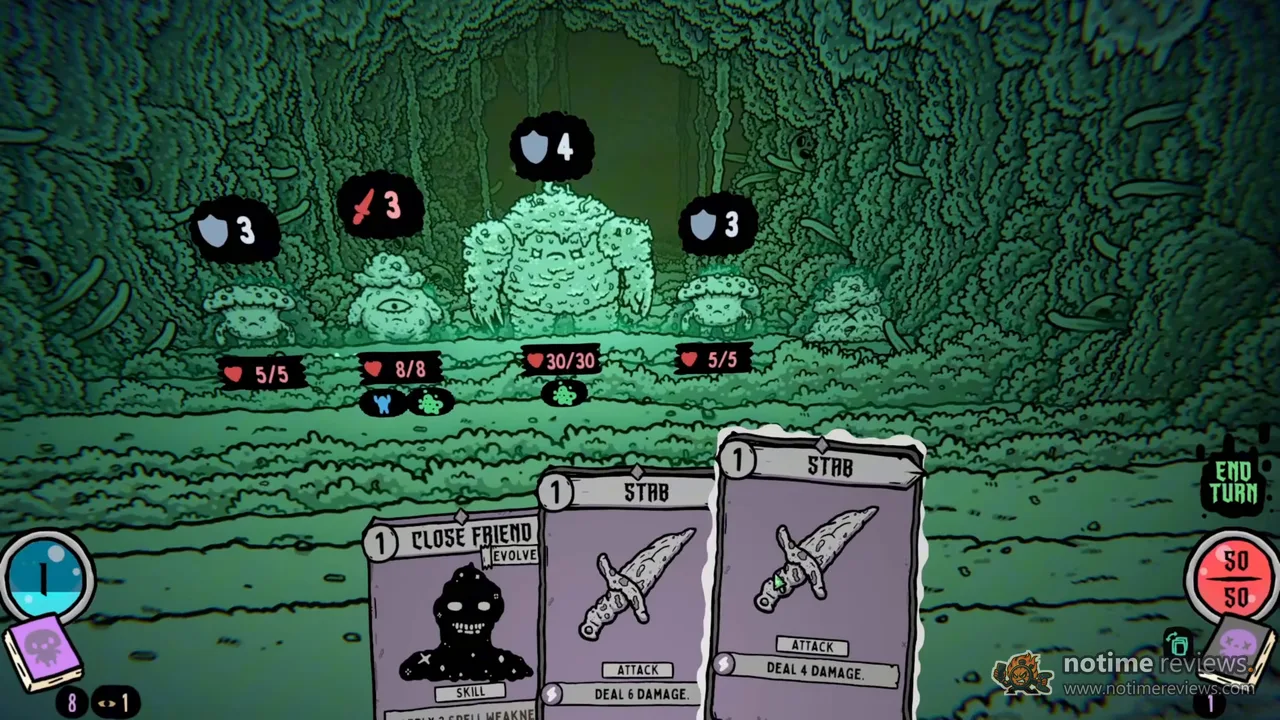
In Shroom and Gloom you do not defeat the Lovecraftian horrors. You eat them. Land a kill with a finisher and the monster comes back as a card called Toasty, and using that card restores your health. So you stop planning for damage. You start planning for killing blows that will refill your health bar before the next room.
That one change does more work than it sounds like it should. The demo is free on Steam, and it took one fight for me to stop playing it like a normal deckbuilder.
The kill is the potion
This niche is full of Darkest Dungeon look-alikes that nail the mood and then hand you a stack of stale cards. The map here does not save it either: branching rooms through a dungeon under the ground, nothing you have not walked before.
What is different is what happens to the cards.
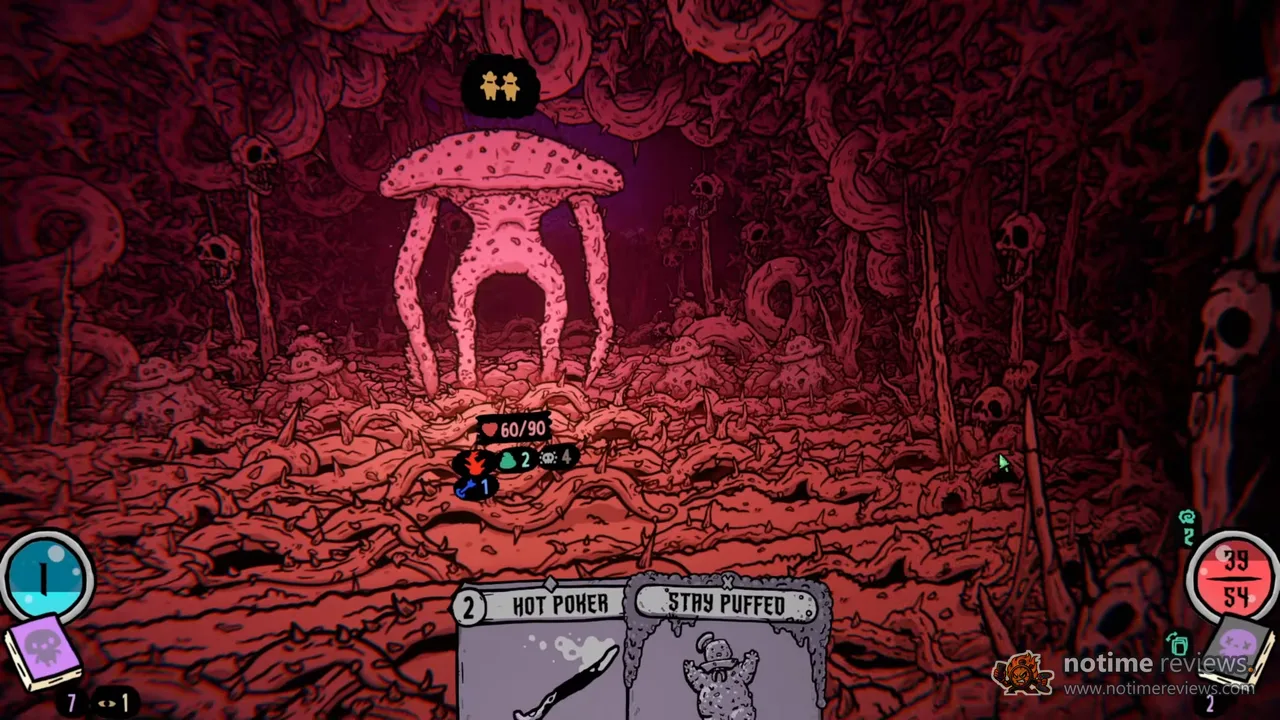
Abilities level up through repeated use, they scale damage on final killing blows, or they mutate into higher-tier variants entirely. Even inside a short demo those upgrade paths hint at some deep synergies. You can specialize in raw physical damage, lean into magic, or stack multi-turn debuffs, and all three felt like real options rather than one good build and two traps.
But build variety means nothing without pressure, and the pressure here is that you have to earn every heal. Specific finisher cards do not just clear the board, they generate a consumable card that you have to use on the same turn. Drag the abomination onto your character, the card is eaten, your health goes up. Turn order stops being a formality and becomes the actual puzzle. Build the deck right and plan the sequence and you steamroll the waves. Get it wrong and you walk into the next room on fumes.
Shroom and Gloom screenshots
I was punching locks and losing health
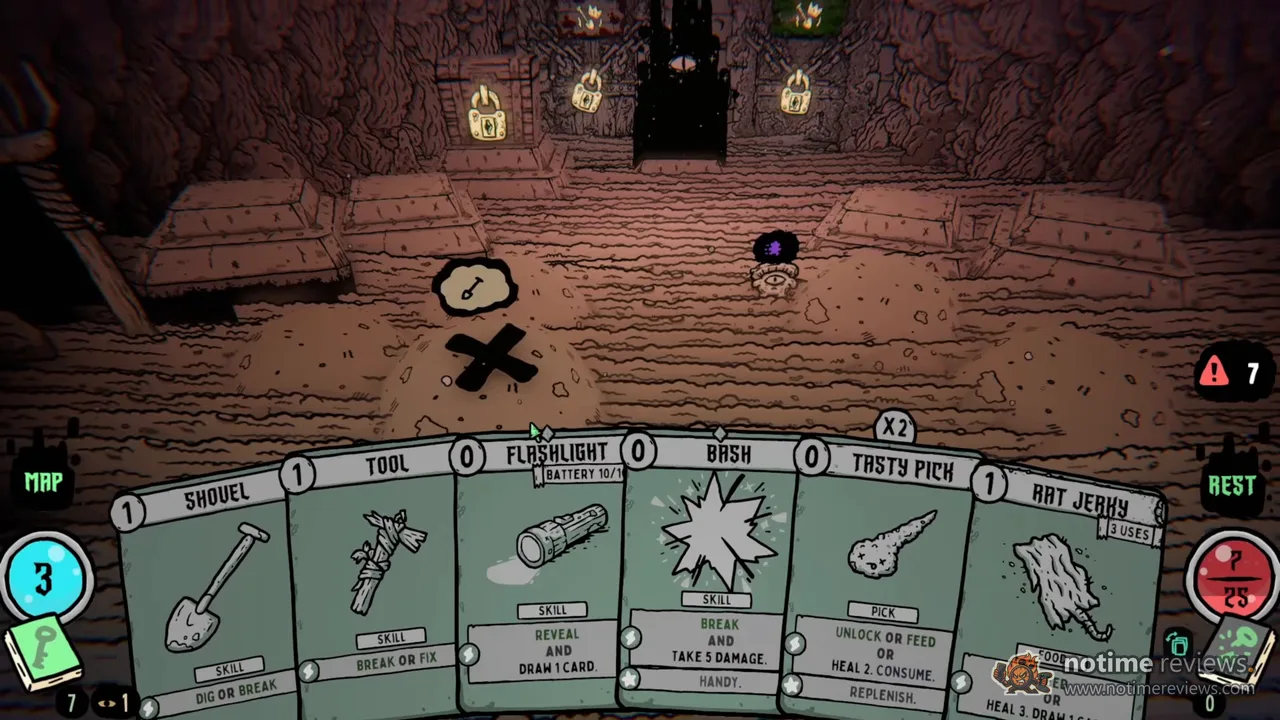
Combat is only half of it. Borrowing the curio idea from Darkest Dungeon, rooms are full of things to poke at: rusting chests, sealed doors, dark bonfires, dirt piles. Instead of cluttering an inventory with keys and torches, you draw from a dedicated exploration deck. Lockpick opens locks. Torch cleanses corruption and lights bonfires.
And that deck is wired straight into resting. Sitting by a bonfire in a cleared room triggers escalating status damage every single time. Curios are single use, environmental damage scales as you go deeper, so camping without preparing for it punishes you. Cleanse a curio first and it flips from hazard to positive modifier and suppresses that rest debuff, which is how you actually heal safely.
It took me a while to work out that the curios were the problem. My health kept ending up lower after a cleared room and I had no idea why. Then I saw it: I was bashing a lock open with my fist. That card is in the exploration deck too. It opens the chest, and it wounds you for the trouble.
So the deck building runs in two directions at once, combat output against exploration utility, and every heal you farmed in a fight can be taxed away by one careless curio.
What the demo does not prove
A short demo only gives you a glimpse. It cannot test how run-to-run meta progression scales across long sessions, and that is usually where this genre lives or dies. The developers promise extensive card customization and endless upgrade paths for the full release, which is a promise and not a feature yet.
What the demo does prove is that the dual deck friction works and the card mutation loop works. The core of Shroom and Gloom is not Darkest Dungeon risk management wearing a mushroom hat. It is a resource conversion puzzle.
Who should wishlist it
Wishlist this if you live for the strategic min-maxing of Slay the Spire, or if the oppressive atmosphere of Darkest Dungeon is the reason you keep reinstalling it. Skip it if you want a fast, low-friction roguelike you can play with half your attention.
One note on timing: we played the Steam Next Fest demo, and everything above is about that demo. The game has since gone into early access at $14.99, which happened after the video went up, so nothing here speaks to the release build.
Played it already? Drop your best synergy in the comments under the video. I want to know what mutation everyone else chased.