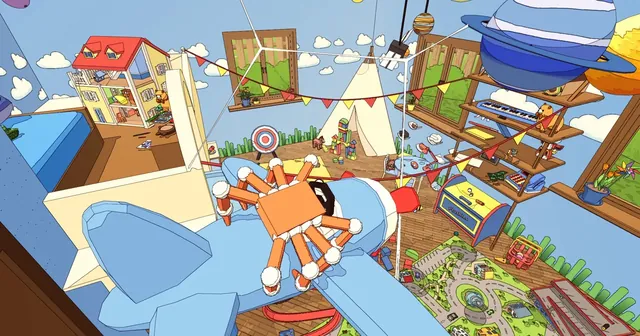
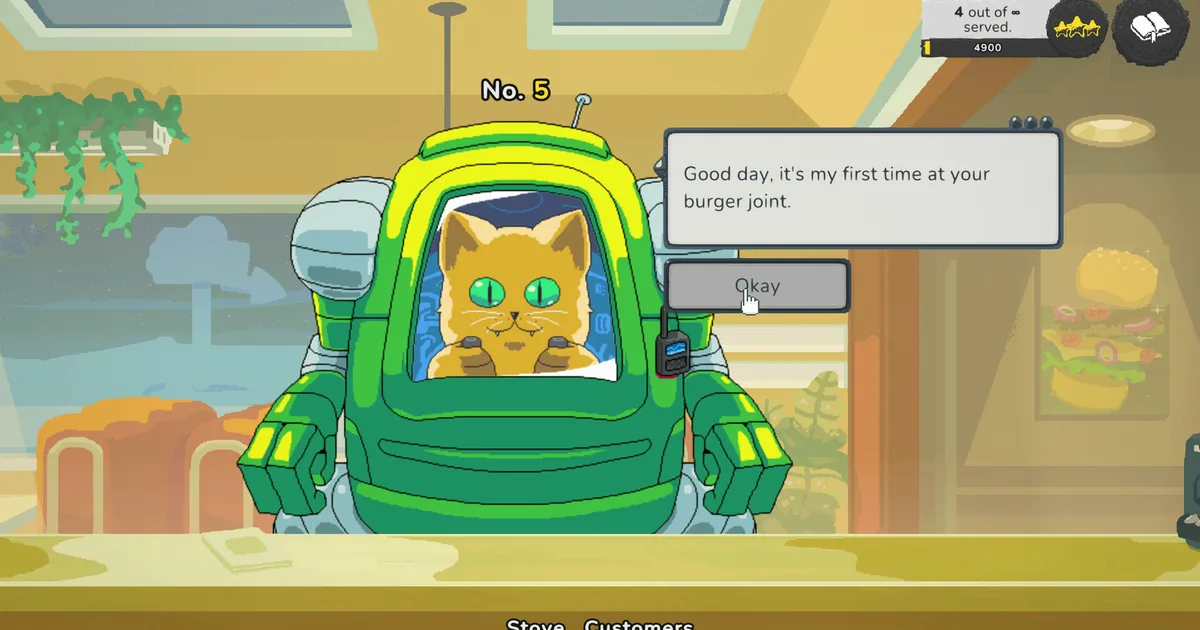
Steam’s Cooking Fest started on October 13, and there is no curated list behind it. The fest page is just Steam’s Cooking tag with a banner on top, which right now means 428 discounted games: restaurant tycoons, food truck sims, a lot of things called “Simulator”, and a few genuinely odd ideas buried in between.
To find the best ones I’ve been digging through Steam for a good while, and what follows are the gems: games from small independent studios, all from the last couple of years, all discounted right now, and all loved by the people who bought them. Prices are in US dollars, checked on October 14. The fest ends on October 19 at 10am Pacific, which is 7pm in Central Europe.
Two games would have topped this list, Creature Kitchen and Papa’s Pizzeria Deluxe, but both already had their turn in our Steam Autumn Sale top 10 two weeks ago. They are still on sale, and still worth it. Everything below is new to us.
The Chef’s Shift runs a whole restaurant through your keyboard
Every action in The Chef’s Shift is a word you type. A label floats over each station and each customer, and spelling it out is how you take the order, cook the dish, plate it and take the money. Menus are typed, settings are typed, even your choices in a conversation are typed. Think Diner Dash, except your mouse has the day off.
The customers are where it gets tricky. Mimes only answer to symbols, businessmen want numbers, tourists hand you words in other languages, and VIPs, rat invasions and little minigames interrupt service on top of all that. The campaign runs across six restaurants, each one its own chapter and its own cuisine: pizza in Italy, then dumplings, Mexican, Korean bibimbap and Japanese donburi. The developers promised six to nine hours at launch, and players on Normal report closer to eight to eleven. After that there is an endless mode and leaderboards.
What players talk about most is the story, which nobody seems to have expected from a typing game. Lorenzo is a thief who somehow ends up running a pizza place, and things turn into a full mafia soap opera from there. More than half of recent English reviews mention the story, words like “telenovela” and “drama” keep showing up, and one player claims the writing rivals The Sopranos. Plenty also say their typing speed went up without them noticing. The complaints are about the English text, which is stiff in places, the stock music, and the harder symbol words later on. The Australian site Player2 also pointed out that drugs, guns and death sit a little oddly under such a cute art style.
The Chef’s Shift comes from Panitia GameDev, a team of six in Indonesia who built it part-time and remotely. It started as a two-day game jam entry in 2022, a single black and white Italian level, which won Best Game Asia at GameJam+ Indonesia. This year it won Best Gameplay at the Indonesia Game Awards. The 40% in this fest is the deepest discount it has had so far.
Omelet You Cook is Balatro with a frying pan
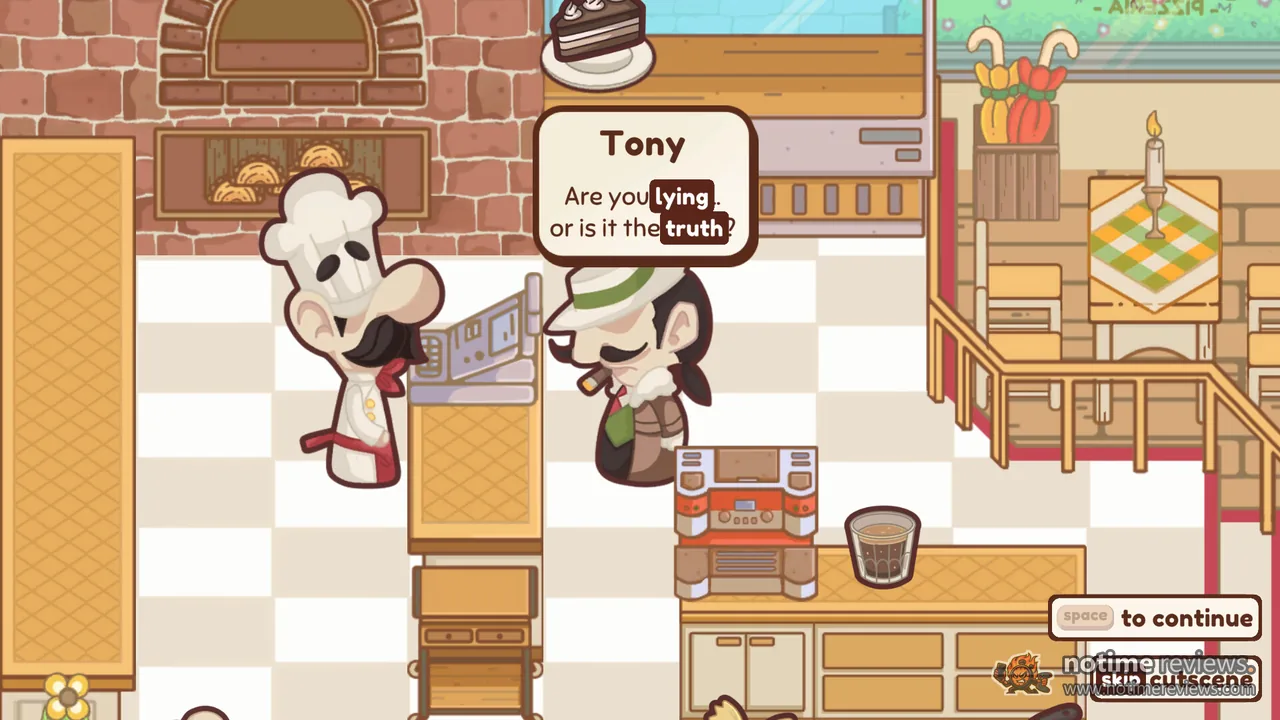
The developers name their influences right on the store page: Balatro, Luck Be a Landlord and Ballionaire. Ingredients come down a conveyor belt, you drop them onto a small omelet, and they score by touching each other. Seafood wiggles around, spicy things burn, and some ingredients are Sticky, Moldy, Wrapped or Gold. Every round a customer sets a score you need to beat, and between rounds there is a shop where you buy helpers, the game’s version of Balatro’s jokers.
It is set in the cafeteria of a school in Middlesville. The customers are students and teachers, more than 70 of them, each with their own tastes, and the final boss is Principal Clucker, a giant chicken. There are over 140 ingredients, 90 helpers, 13 pantries that work as starting decks, and five difficulty levels the game calls Aprons. For anyone who hates roguelikes for being frantic, it can be played turn-based instead of real-time, and there are weekly runs with fixed starting pantries too.
Omelet You Cook is made by just two developers, Dan Schumacher and Hjalte Tagmose. They launched it in Early Access in June 2025 with 48 ingredients, after a demo and a spot in Next Fest, and had roughly 2,000 to 2,500 wishlists before launch, which is very small. The first 507 Steam reviews were all positive; it took 111 days for a negative one to show up. Northernlion playing it gave sales a big push. Over seven months they shipped 21 updates, and when 1.0 arrived in February with Chinese, Japanese, Korean and Thai translations, it sold 37,000 copies in its first week.
The word “Balatro” appears in about one in six recent English reviews, almost always in a good way, and players love the absurd combos (one talks about feeding someone cans and wrenches). The complaints are that luck matters a lot on the higher Aprons, that placing ingredients exactly where you want them can be fiddly, and that the tutorial does not explain much. Players with a lot of hours are not rare here: half of recent reviewers have over 15 hours in it.
Galaxy Burger is the stress-free pick, and it seats eight
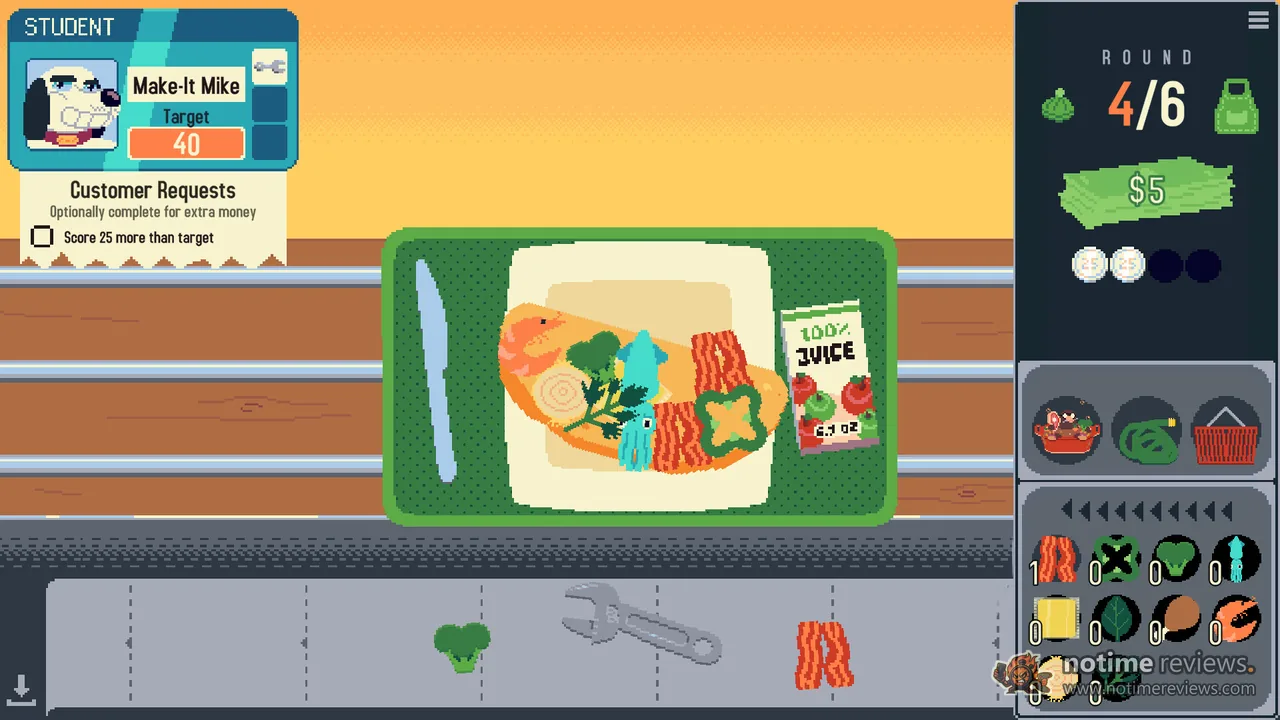
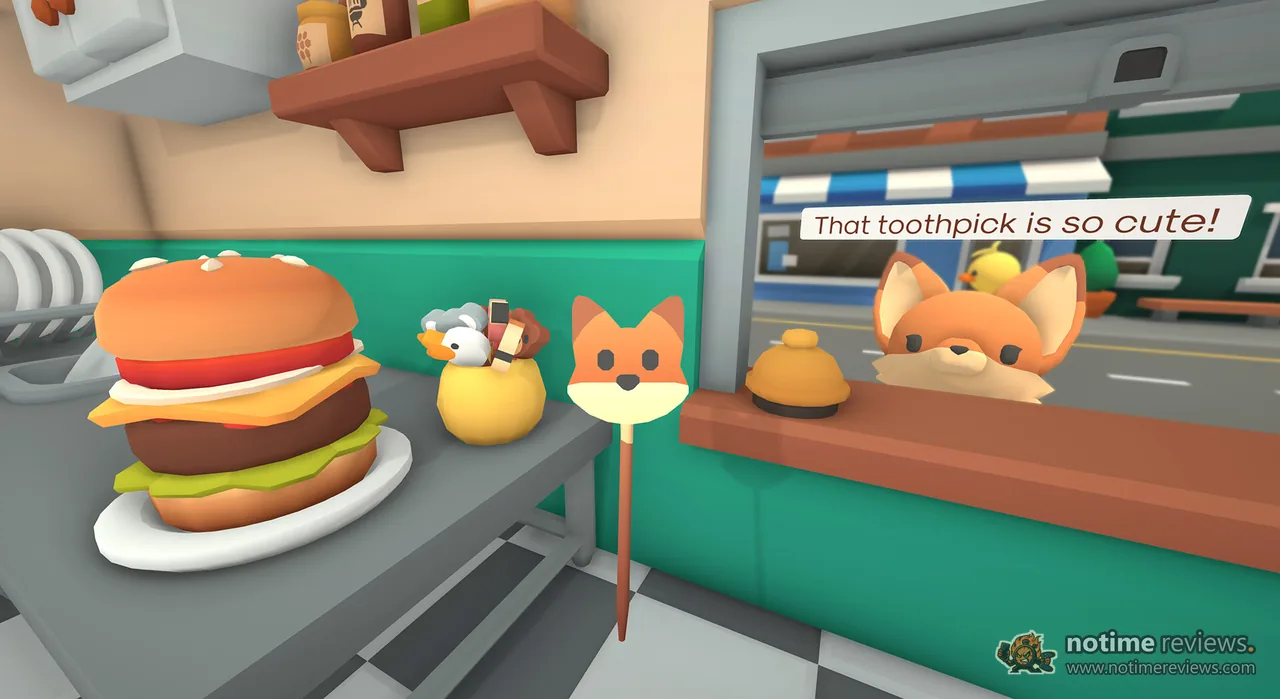
Most cooking games are about panic: a timer runs down and customers storm out. Galaxy Burger has no timer by default. Galactic Workshop built it as a burger joint in space where the customers are aliens, cats and cats in mech suits, and you can take as long as you want to put an order together.
You start with burgers and work up to rice burgers, toasts, subs, fries, calamari, onion rings, sodas and coffee. Some customers are vegan, some have allergies, and some order combos or online deliveries. Each planet has a five-star rating to earn, which unlocks new ingredients, equipment and recipes, and you buy your way to new planets across four star systems in whatever order you like. Later updates added delivery robots, a kitchen editor where you place the stations yourself, and Zen Shift, an even calmer mode. Anyone who does want pressure can pick Time Challenge.
The relaxed design is the thing players single out. Around a third of recent English reviews mention it being chill or relaxing, and the most upvoted one says it has “no anxiety-inducing elements”, which several players with anxiety or ADHD agree with. A lot of people describe it as a game to play while a podcast runs.
It also does co-op for two to eight players, online or over LAN, which makes it one of the biggest group games in the fest. That is also where most complaints are: co-op desyncs and bugs, and only the host keeps the progress. Other players find getting every planet to five stars a long grind, and a few recent reviews note the last update was back in November 2025. The studio is already working on its next game, Fantasy Burger, with the same one to eight player co-op.
KuloNiku: Bowl Up! puts meatball soup on live TV
You inherit your late grandmother’s shop, Bakuso, in the town of KuloNiku. It sells bakso, the Indonesian meatball soup, and it used to be famous. Now there is a flashier place in town, Souper Starz, run by a rockstar chef named Stella, and the shop has to win its customers back.
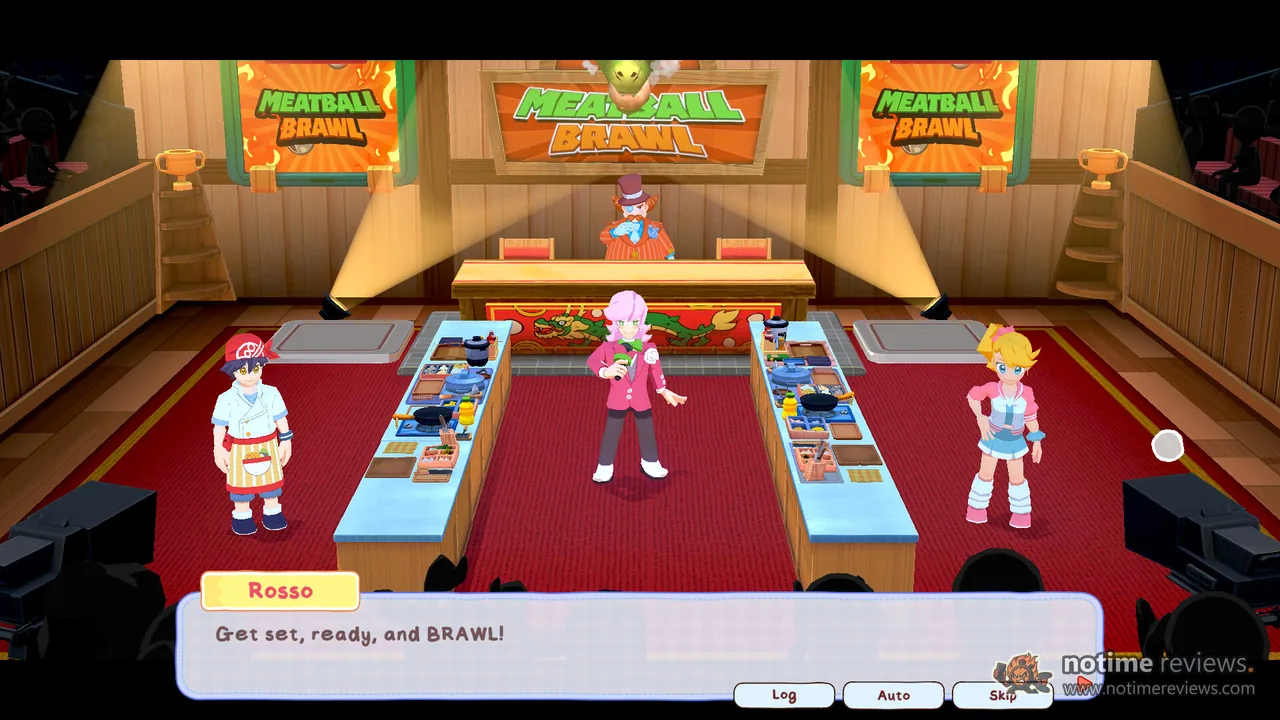
The cooking works like Cooking Mama: every step is its own little minigame, chopping, boiling, frying, using the blowtorch, skewering. Each bowl has limited space and four flavor profiles to balance, and customers ask for things like a meatball twist with no meat. Twice a week the game goes on TV for Meatball Brawls, three-round cook-offs in front of a panel of up to three judges while a live audience shouts extra requests. Between all that you hang out with five characters in a way that reviewers keep comparing to Persona, and there is a Cozy Mode that turns off the timer and customer patience completely.
Gambir Studio is from Yogyakarta, Indonesia. Before this it made mobile food games like Selera Nusantara, which together have reportedly passed 10 million downloads. KuloNiku is reported to be the first Indonesian game published by Raw Fury, and Indonesia’s Minister of Creative Economy praised it publicly. The studio says its inspirations range from Cooking Mama World Kitchen and Good Pizza, Great Pizza to Persona and Mega Man Legends, which shows in the art.
Press liked it. Gamers Heroes gave it 80% and said it “hits the sweet spot”, and But Why Tho called it “delightfully cozy and ridiculous”. Players praise the Cooking Mama nostalgia, the characters and Cozy Mode. The common complaints are that it gets repetitive later and is on the easy side, and that there is a lot of dialogue. Since the April launch it has had a string of free updates, the latest of which added an endless mode on October 8.
Burgie’s Cozy Kitchen sits in the corner of your desktop
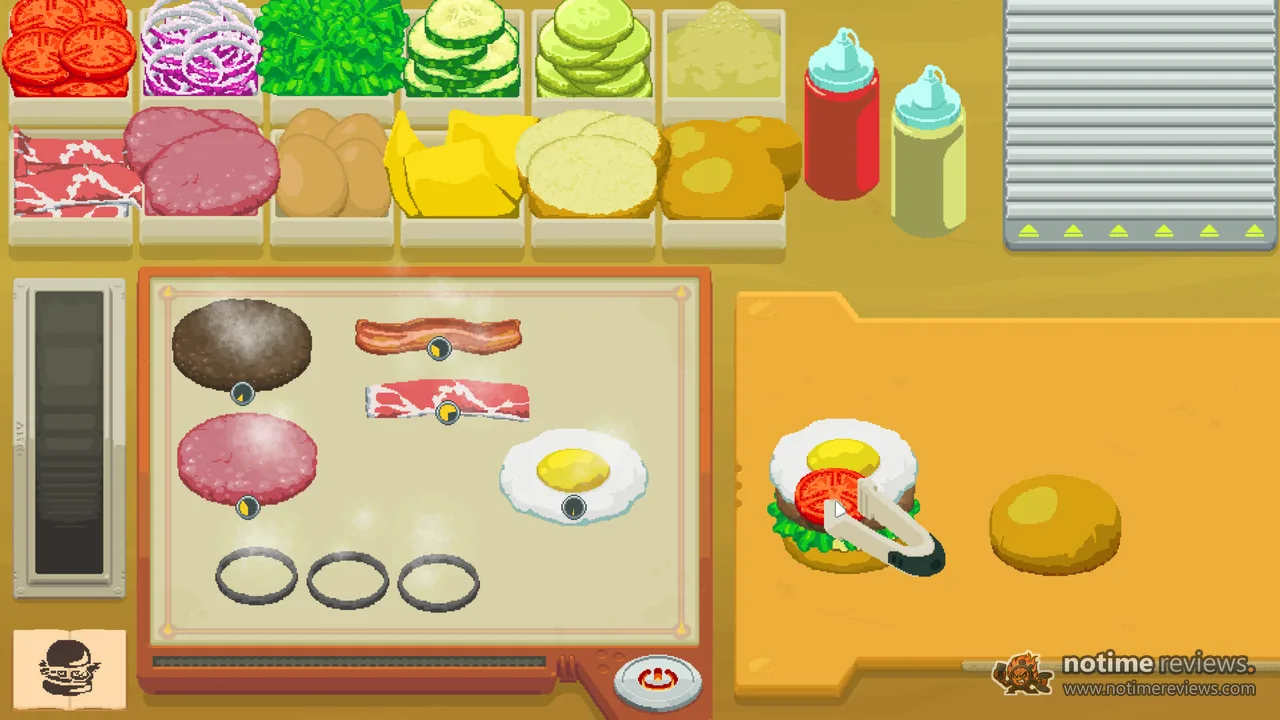
This is not a game you sit down with for an evening. Burgie’s Cozy Kitchen is a tiny burger stand that lives in a corner of your screen while you work, study or watch something, and a bell rings when a customer walks up.
There are four ways to run it. Frenetic is the full game, with a steady line of picky, impatient customers. Relax lets you minimize it and come back every five to fifteen minutes. Pomodoro turns it into a focus timer: the next customer shows up exactly when your break is due. And Streamer mode hooks it to Twitch, YouTube, Kick or TikTok chat, so viewers place the orders themselves, complain when you get them wrong, and feed a global streamer ranking.
It has grown a lot since it entered Early Access in February 2025: a grill and smash burgers, sauces, floor stains to mop, a warehouse you restock by hand, drinks and trays, gamepad support and more than 400 collectible cards. The developer behind HeyNau, who signs posts as Nau, builds it in the open. In August Nau floated an upgrade tree for the shop, players pushed back, and the idea was dropped with the reply “Maybe you just saved the game’s concept!”. The Early Access label is a bit misleading now: the store page calls the current build the final version and says not to expect a 1.0, the label just signals that updates keep coming.
Most of its reviews are not in English, and the English ones are mostly from people who leave it running for a long time, with a median above 25 hours. They love the Pomodoro and Relax modes as a focus tool, and the cute customers. The one reviewer who did not get it put it well: “a game built around NOT BEING PLAYED”. If you want something to play rather than something to keep around, this is the wrong pick.
Arctic Eggs asks if you can fry an egg on Mount Everest
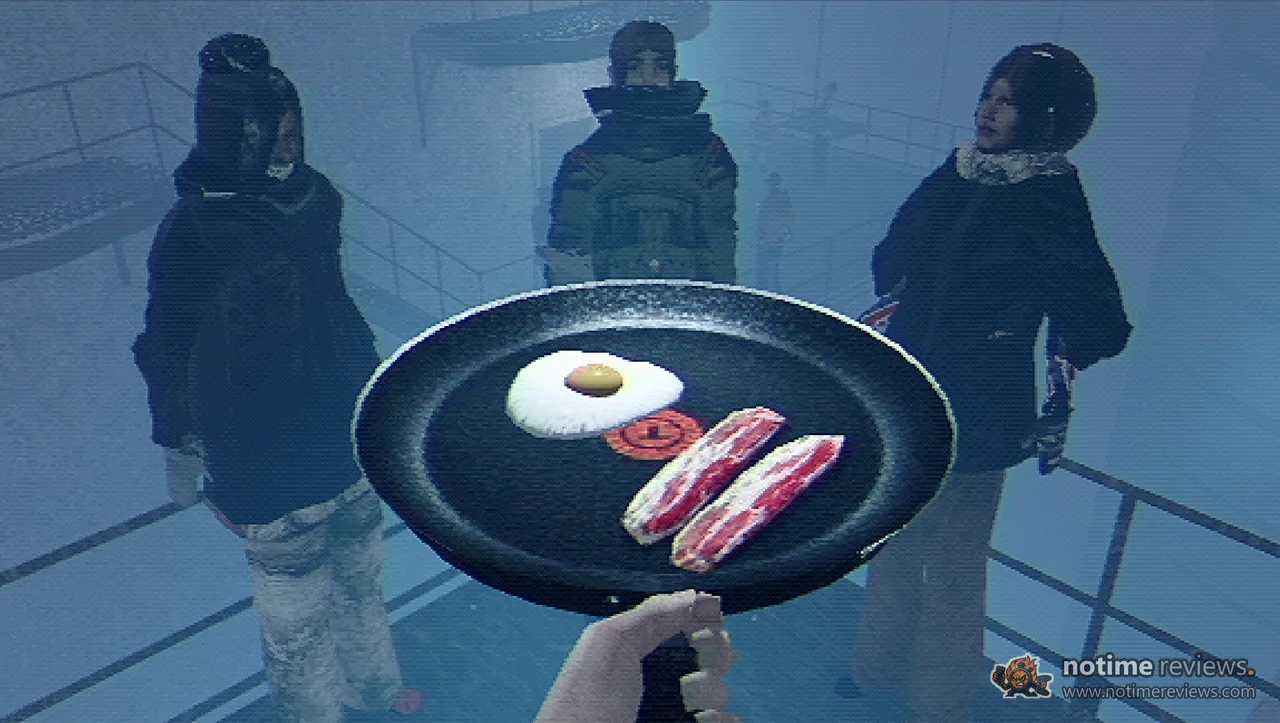
Arctic Eggs is a physics cooking game, and the frying pan is the whole controller. You tilt it with the mouse, flick it to flip, and move it closer or further from the heat. You play a disgraced Poultry Peddler in a hazy Antarctic city sometime in the late 21st century, and you cook for its people one at a time. Feed 27 of the 34 citizens and you reach the ending, so you can skip the orders that drive you mad.
And they will. Customers want eggs fried with cigarettes, bullets, cockroaches or a stingray. One wants an egg done before the ice in their glass melts. Another hands you beer bottles to balance without spilling. And nearly everyone asks the same question: can you fry an egg on Mount Everest? The writing is the part players quote the most (“For a game called Arctic Eggs the writing sure is fire”), along with the soundtrack and the grainy look, a filter the developer added after playing Buckshot Roulette.
It started as a two-week entry for Dunkey’s Bigmode Game Jam in 2023. The designer, Keven Brown of The Water Museum, took out keyboard control of the pan after watching Dunkey struggle with it on stream. The finished game took just under half a year with a small team, programmer A.B. Marnie and composer Cameron Ginex among them, and the release button was pressed on a lunch break at Brown’s day job. The publisher Critical Reflex only signed it after launch and added 11 languages.
Destructoid gave it 8/10 and called it “worth your time and cash”, and it was nominated for Best Indie Game - Self-Published at the 2024 Golden Joysticks. It is short, around three hours for most players, and the store page jokes that the game is not hard, cooking is. Reviews complain about the final challenge, about bullets and roaches, and about the pan snapping to odd angles at some framerates. That has not stopped it from selling out a 300-copy vinyl of the soundtrack, which then needed a second pressing.
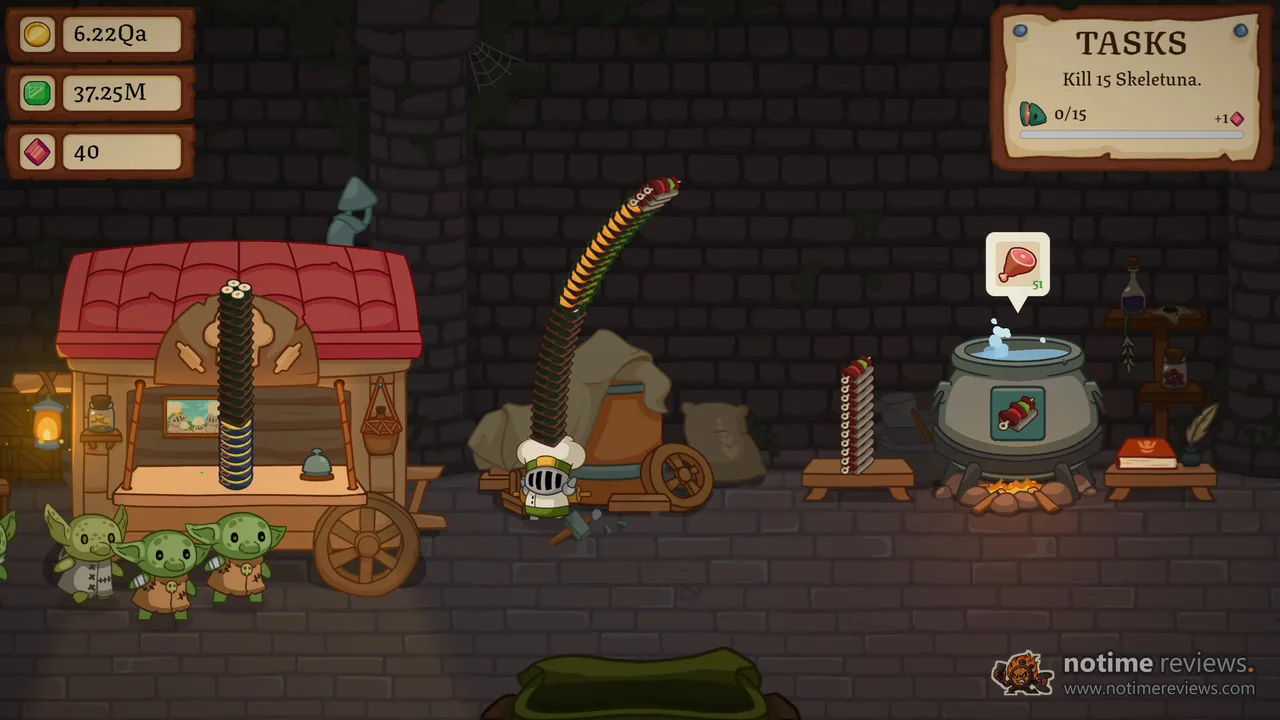
Chef Knight cooks what it kills
In Chef Knight monsters are ingredients. Each run is a short, timed trip into a top-down dungeon, where your little knight hits things until they drop meat, mushrooms and worse. Back in the kitchen, those turn into dishes for goblin customers, and the gold goes into a huge skill tree that makes you fight faster, cook better and get deeper next time. Recipes like Truffle Ramen unlock as you go.
There are four dungeon biomes, twelve monster types and sixteen dishes. The developers list Delicious in Dungeon (Dungeon Meshi), Cookie Clicker, Vampire Survivors and The Binding of Isaac as inspirations, and the skill tree is very much in the Diablo style. Expect about three to four hours to see everything, which is also the main thing reviewers bring up.
It started as a student project at the Tiltan School of Design in Israel and was released by Clover Bite, the studio behind GRIME. That combination worked: 40,000 players in its first two weeks and 90,000 by late August. Players like the cute art, the steady snowball of upgrades and how easy it is to finish all the achievements, and several call it a good Steam Deck game.
The complaints are almost all about length. More than half of recent English reviews say it is short or ask for more, a few say it is too easy, and some found the last level laggy until a September performance update. For the price, plenty of people seem fine with a three-hour game that does not overstay its welcome. And if you want more of it, the team has already announced a spin-off, Chef Knight: Desktop Adventures, a dungeon shop that lives on your desktop like Burgie’s does.
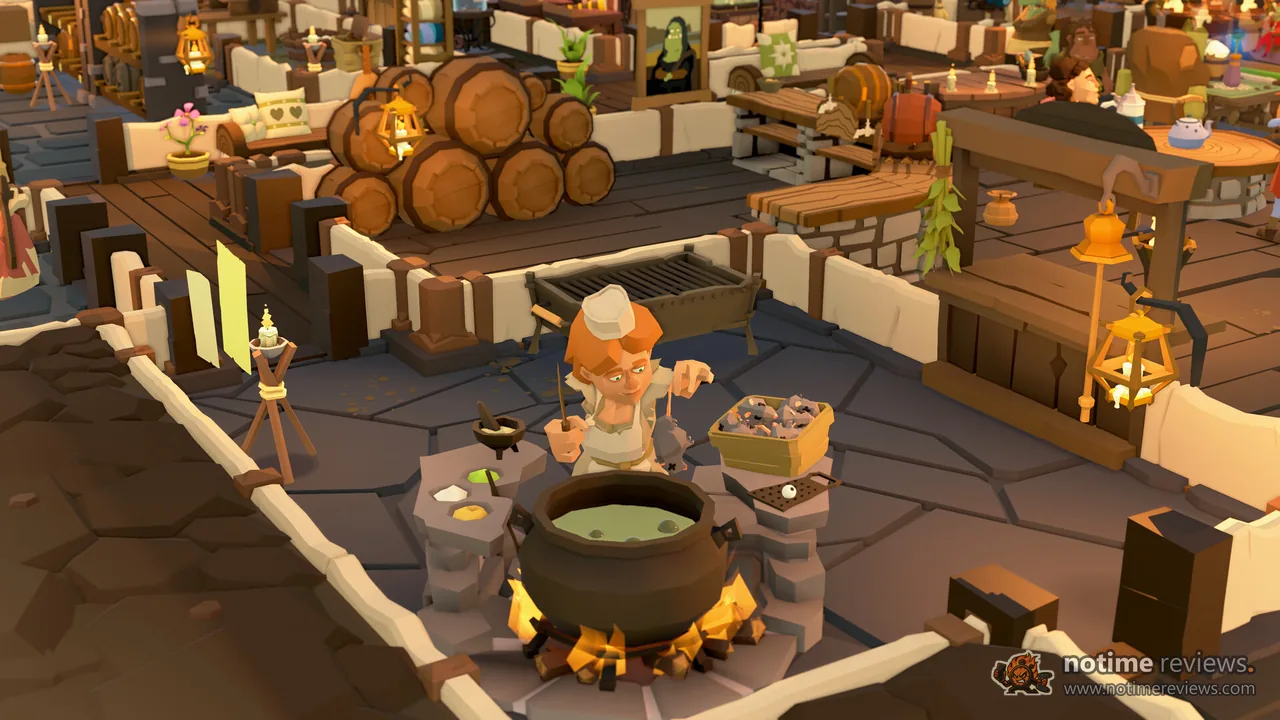
Tavern Keeper took eleven years to make
Greenheart Games made Game Dev Tycoon, and Tavern Keeper is their second game. Brothers Patrick and Daniel Klug started working on it in late 2014. Along the way it changed engines three times and went through about six different versions before it reached Early Access in November 2025. The core team is seven people, and the studio made a point of building it without any generative AI.
You build and decorate a fantasy tavern, hire staff, stock the larder and then deal with whatever the simulation throws at you. Dirt, heat, noise, flammability and sickness all affect each other, so the store page’s example of a bad day is half the staff home sick, orders piling up, and a lantern spark setting the place on fire. The decoration side goes deep: a design mode lets you combine pieces into your own furniture and share it by code. On top sits a storybook campaign with hundreds of short stories, fully narrated by Steven Pacey, best known for narrating a lot of fantasy audiobooks. It plays on Relaxed or Challenging, plus a Freeplay mode.
PC Gamer called it “the management sim of my dreams” and one of the best Early Access games of 2025. Players love the story and the narration, the decorating, and the Game Dev Tycoon humor. The negative reviews say there is not much content yet for the price (three campaign locations at launch, about 20 hours) and that the taverns were too small with no way to expand.
The studio has been answering that. A May update added full controller support, Steam Deck Verified status and automatic restocking. The October 1 update, Digging Deeper, added cellars and stairs, which the team had once ruled out completely, along with ground-level expansions and a fourth campaign location, the biggest so far, full of dwarves. The 1.0 plan promises more locations, but there is no release date yet.
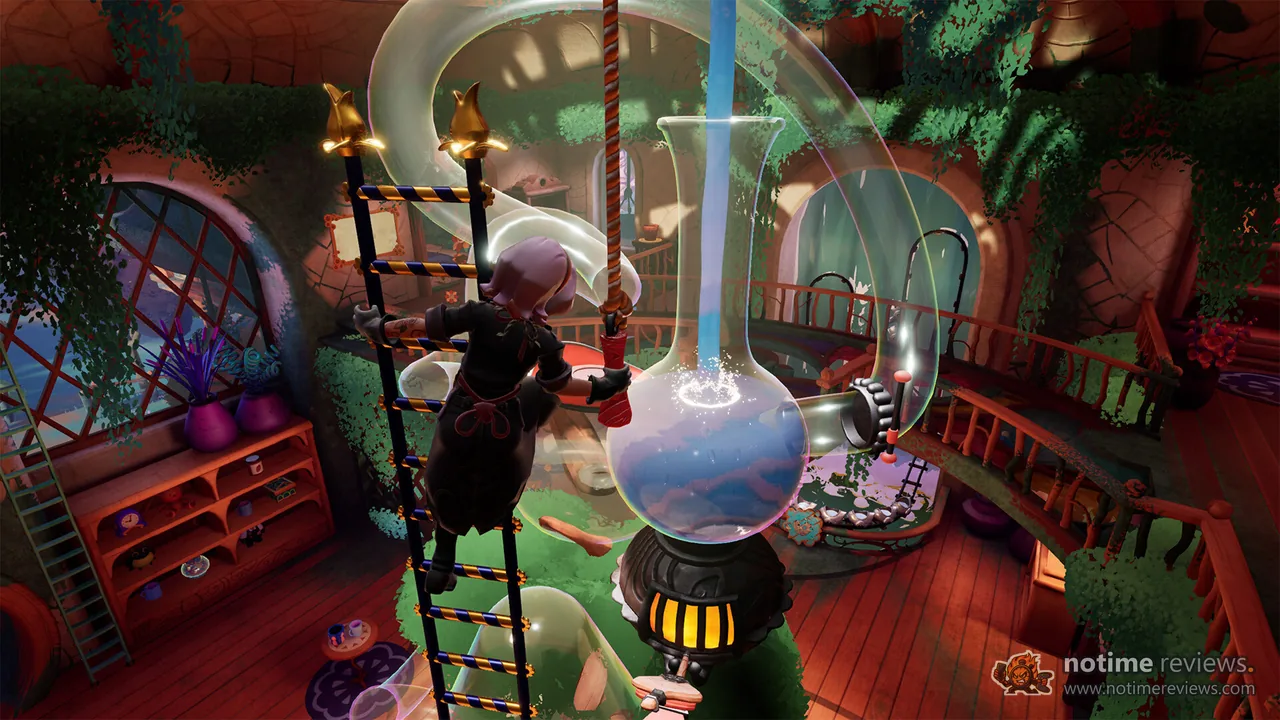
Wanderstop is about tea, and about not wanting to make tea
You play Alta, a champion fighter who has finally lost, burned out, and ended up in a tea shop in a magical forest clearing that belongs to its keeper, Boro. She does not want to be there at all. The store page calls the game “a tea shop management ritual”, and it is about as close as a cozy game gets to being about burnout.
The tea machine is the centerpiece. You climb a ladder, pull a rope to fill a giant flask, pump bellows to boil it, kick a valve, drop in the leaves and whatever fruit you have grown, and pour. The farming happens on a hex grid where planting patterns decide what grows: seeds in a row grow small hybrid plants, seeds in a triangle grow big ones. The game is split into chapters, and the clearing resets between them, so the garden you built does not come with you. That reset is the one thing negative reviews mention the most.
The team behind it is a serious one: Davey Wreden, who made The Stanley Parable and The Beginner’s Guide, writer Karla Zimonja from Gone Home and Tacoma, and C418, the Minecraft composer, who built music that reacts to what you do. Wreden pictured a tea shop in the woods back in 2016, and the game grew into a way of dealing with Wreden’s own burnout after The Stanley Parable. Annapurna published it in March 2025.
Critics scored it around 80 on Metacritic and OpenCritic. IGN gave it a 9, PC Gamer 84, GameSpot a 7, and most reviews praised the writing and music while calling the tea loop repetitive. On Steam, a lot of players say it hit them hard, and quite a few say they cried. Others call it boring or tedious, or came expecting a Stardew-style farm game. Sadly, Ivy Road closed in March 2026 after failing to fund its next game, which makes Wanderstop the studio’s only game. It came to Switch in June.
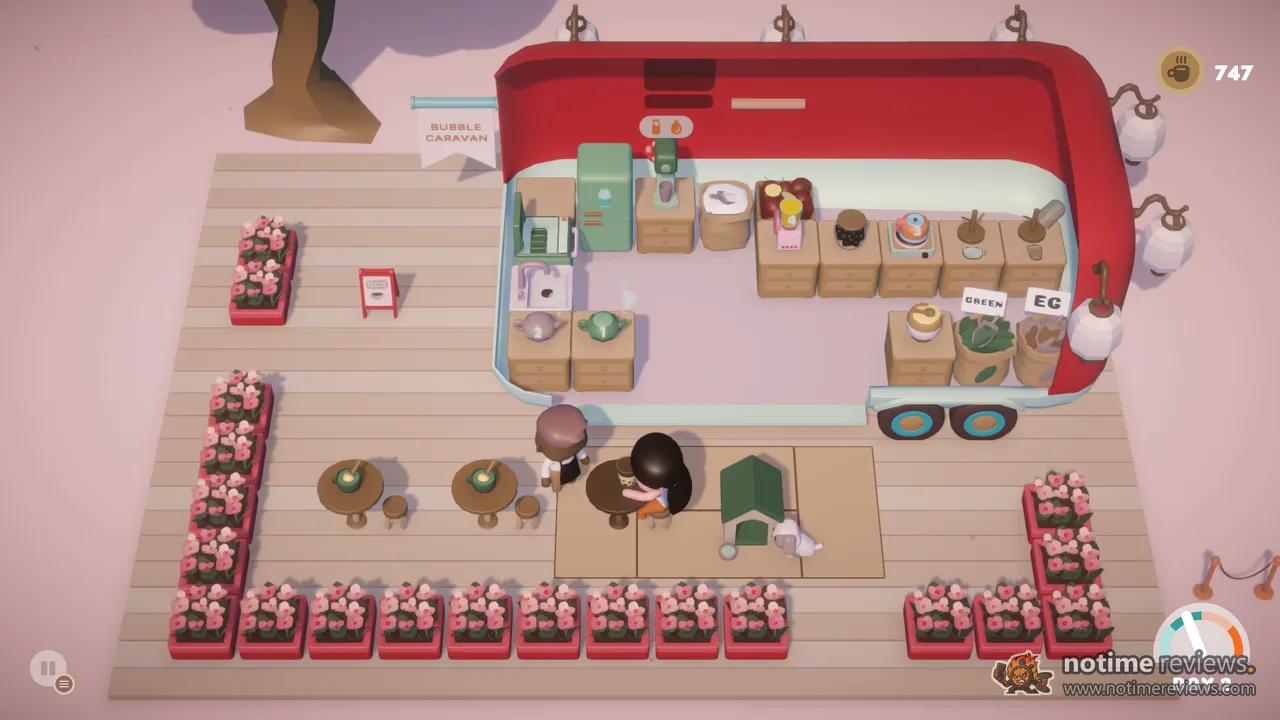
Coffee Caravan puts a café on wheels
Roguelite and coffee shop is not a combination I expected to find in a cooking fest, but here it is. Your café is a caravan on a road trip, and the road is a branching map in the style of Slay the Spire, with service days, shops, mystery stops and treasure along the way. On a service day you grind the beans, brew, wash the cups and serve, while every customer’s patience meter ticks down.
The interesting choice is the menu. You pick which recipes to serve each day, and the fancy ones pay more per cup but take longer, so a greedy menu can sink a run. Equipment and recipes you unlock stay between runs. There is a coffee world and a tea world with more than 25 recipes between them, bubble tea included, and free updates added an ice cream world, three difficulty levels, weekly challenges with leaderboards and Twitch integration. A run takes about 20 to 40 minutes.
Broccoli Games is a married couple, Alena and Ondřej Šimeček, from Jičín in Czechia. They made client and educational games for years, and this is the first game of their own. They recorded the sound effects with their own coffee grinder and machine at home, and list PlateUp!, Overcooked and Unrailed as inspirations. Destructoid summed it up as “Think PlateUp, but much calmer”.
Players call it cute, cozy and relaxing, the same three words over and over. The criticism is that it is easy (customers tend to come one at a time) and that there is not a huge amount to do, with one reviewer saying four hours covers it. The original rule where one failed order restarted the whole map was the most upvoted complaint, and an early update made it optional. The developers said in late 2025 they were working on a co-op update, but it has not shipped yet.
Older, cheaper, and still better than most of the fest
The top ten sticks to games from the last couple of years, which leaves out some of the best prices in the whole fest.
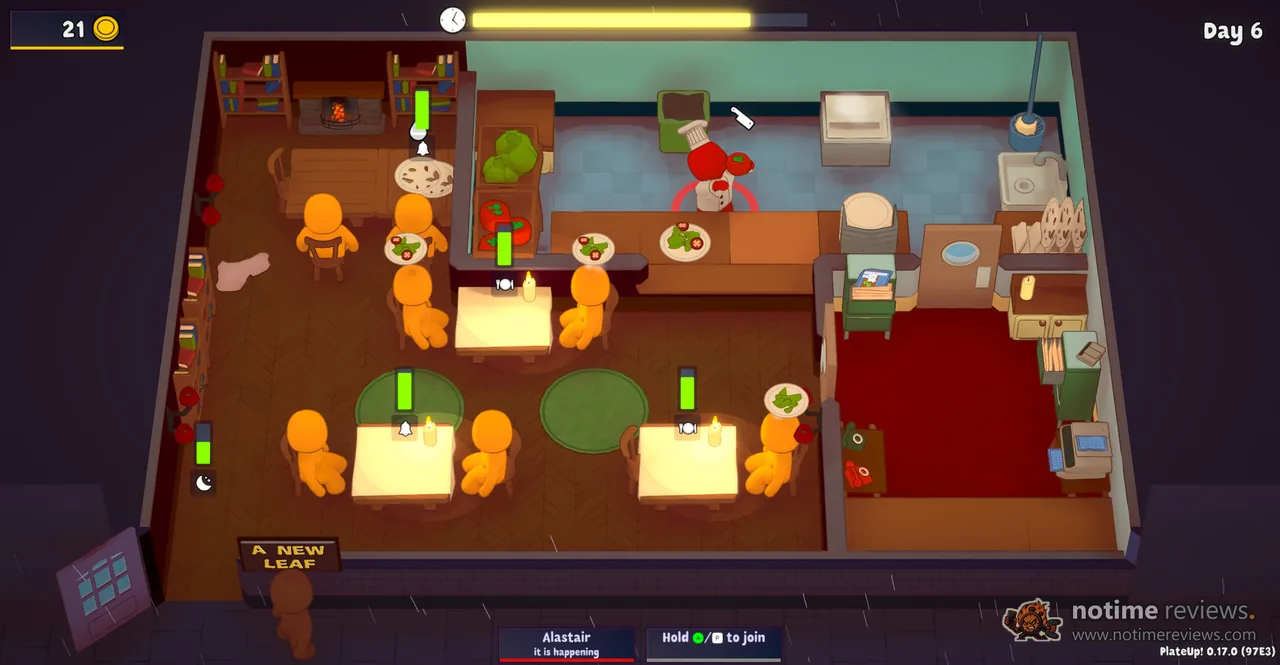
PlateUp! is the one to grab. Up to four players build and run a restaurant from scratch, lay out the kitchen, chain appliances into automatic setups, and try to survive fifteen days before unlocking a franchise. It has 27,695 reviews at 94.6%, and 90% off makes it $1.99.
Touhou Mystia’s Izakaya has the biggest crowd of anything in the fest, 98.6% of 33,013, for $4.19. It is a pixel art restaurant sim built on the Touhou Project: gather ingredients by day, run a small izakaya at night. Papa’s Freezeria Deluxe is at 99.3% of 13,430, $4.79. And a few cheap classics: inbento, the bento puzzle game, for $0.79. Battle Chef Brigade Deluxe, hunting monsters and then cooking them in a puzzle board, 85% off at $2.99. Venba, the short story about a South Indian mother in 1980s Canada told through her recipes, $3.74. And the original Cook, Serve, Delicious! for $3.24.
Small kitchens under 1,000 reviews
Everything here came out in 2025 or 2026, is on sale right now, and simply has not been around long enough to collect many reviews yet. Several of them score higher than anything in the top ten.
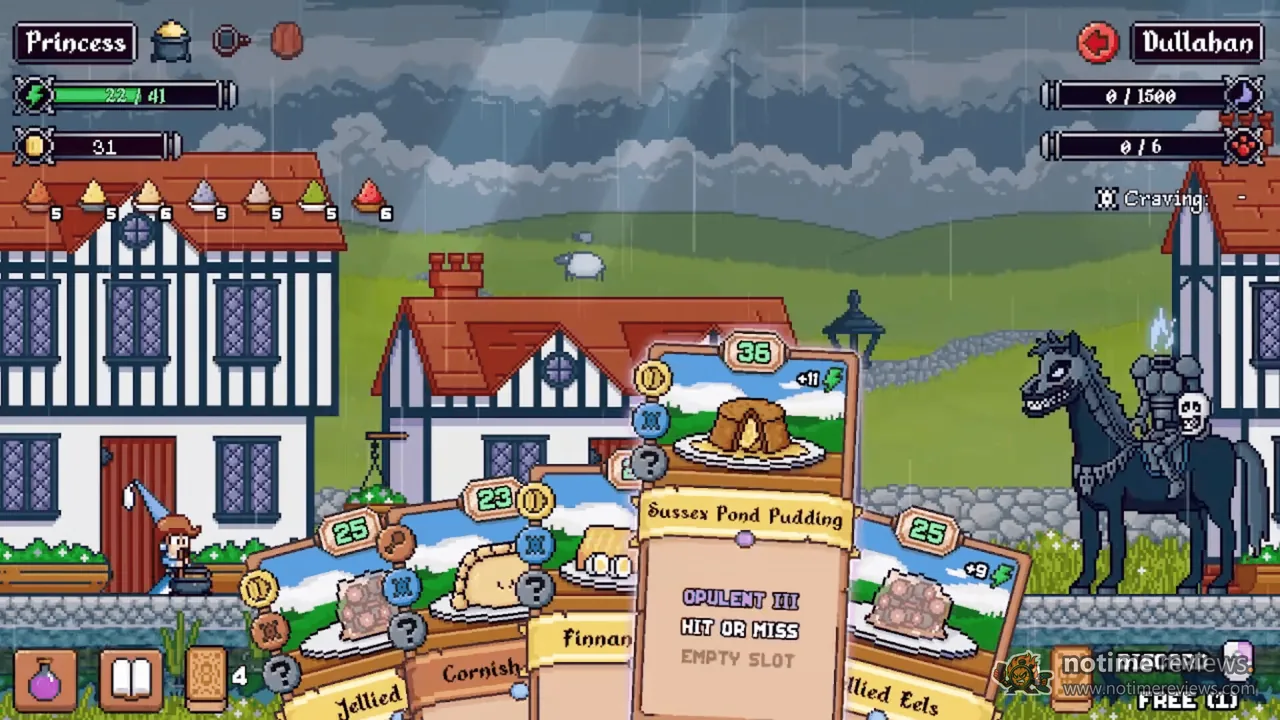
Hungry Horrors left Early Access yesterday, so it is the newest thing on this page. A spoilt princess has to break a curse by feeding the monsters of British and Irish folklore, Jenny Greenteeth and the Dullahan among them, and the dishes are cards in a deck: Yorkshire Pudding, Cranachan, Jellied Eels. 97.8% of 273 for $11.99.
Kitchen Sync: Aloha! is a story-driven cooking RPG in Hawaii where you run your family’s restaurant with a team of chefs, and the timer pauses whenever you need it to. 99.4% of 175, half price at $9.99.
Chinese Street Food Legend is about one night market stall selling kaolengmian, grilled cold noodles, and the people who stop by to talk while you cook. Out since August, 98.1% of 696, and $3.19.
Bento Blocks is a puzzle game about cutting ingredients to fit lunch boxes with the fewest slices, 180 levels and no timer. 98.0% of 441, $10.94.
Monster Meals goes the other way: a frantic food truck game for one or two players where you hunt rats and pigeons for the recipes, and slow service puts you on the menu. 99.1% of 109, and 70% off makes it $2.09.
Little Chef: Cozy Cooking is a three-hour physics kitchen with over 300 recipes “ranging from the gourmet to the gross” (96.8% of 376, $7.19). Onigiri Shop Simulator gives you a one-person rice ball stand on a street corner in Japan (96.5% of 459, $7.19). UMAMI is fifteen hand-painted 3D puzzles where you stack food out of wooden blocks and pet the animals (97.1% of 208, $9.37).
And two more for groups or for quiet nights. Foodslingers is a physics co-op kitchen for up to four players with parkour in it, 97.1% of 103 and $3.49. Tailside: Cozy Cafe Sim is a no-pressure coffee shop where the town’s little stories come in through the daily newspaper, 96.2% of 286 and $4.99.
What to cook before October 19
Funny thing about a cooking fest: some of the best-rated games in it are barely about cooking. A tea shop that is really a story about burnout, an egg game that is really a fever dream, a dungeon crawler where the kitchen is just where the loot goes. The straight restaurant sims are here too, just usually with something bolted on, a keyboard, a rival chef, a corner of your desktop.
If you want one, get The Chef’s Shift. It has the best score of the lot and it plays like nothing else in the fest. If you have friends to drag along, PlateUp! at $1.99 is the easiest yes on this page.
The fest ends October 19 at 10am Pacific.
Three games for under fourteen dollars
- Arctic Eggs
- Chef Knight
- Burgie's Cozy Kitchen
One very strange egg game, one dungeon you eat your way through, and a burger stand that lives in the corner of your screen. $3.99 + $4.79 + $4.89, all playable now.
Get the group in the kitchen
- Galaxy Burger
- PlateUp!
A calm burger joint for up to eight people, and the four-player restaurant game that still has the biggest crowd in the fest. $5.87 and $1.99.
Skip the usual restaurant sim
- Omelet You Cook
- The Chef's Shift
A roguelike where the score is an omelet, and a cooking game you play with your keyboard instead of your mouse. $10.49 and $7.79.